Last updated November 24, 2026
 Wrought iron
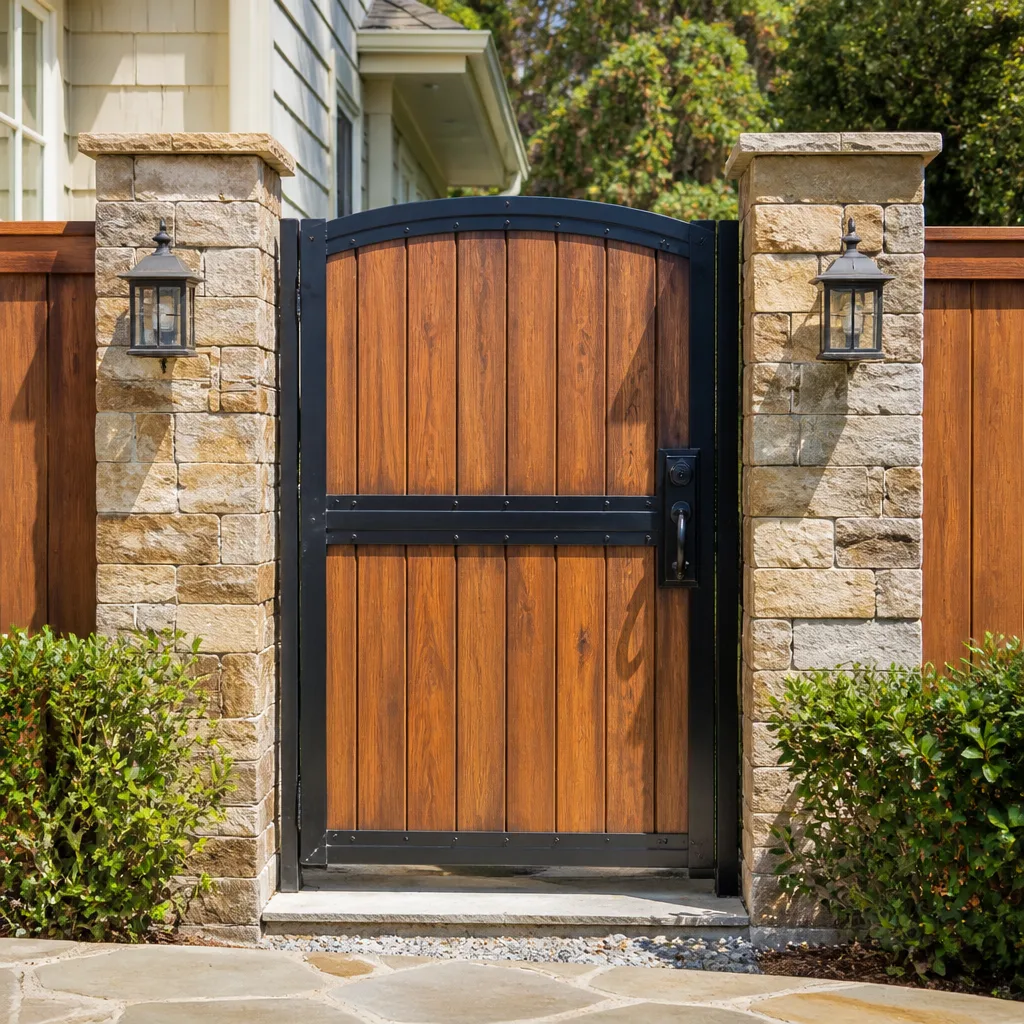 Wood & steel frame
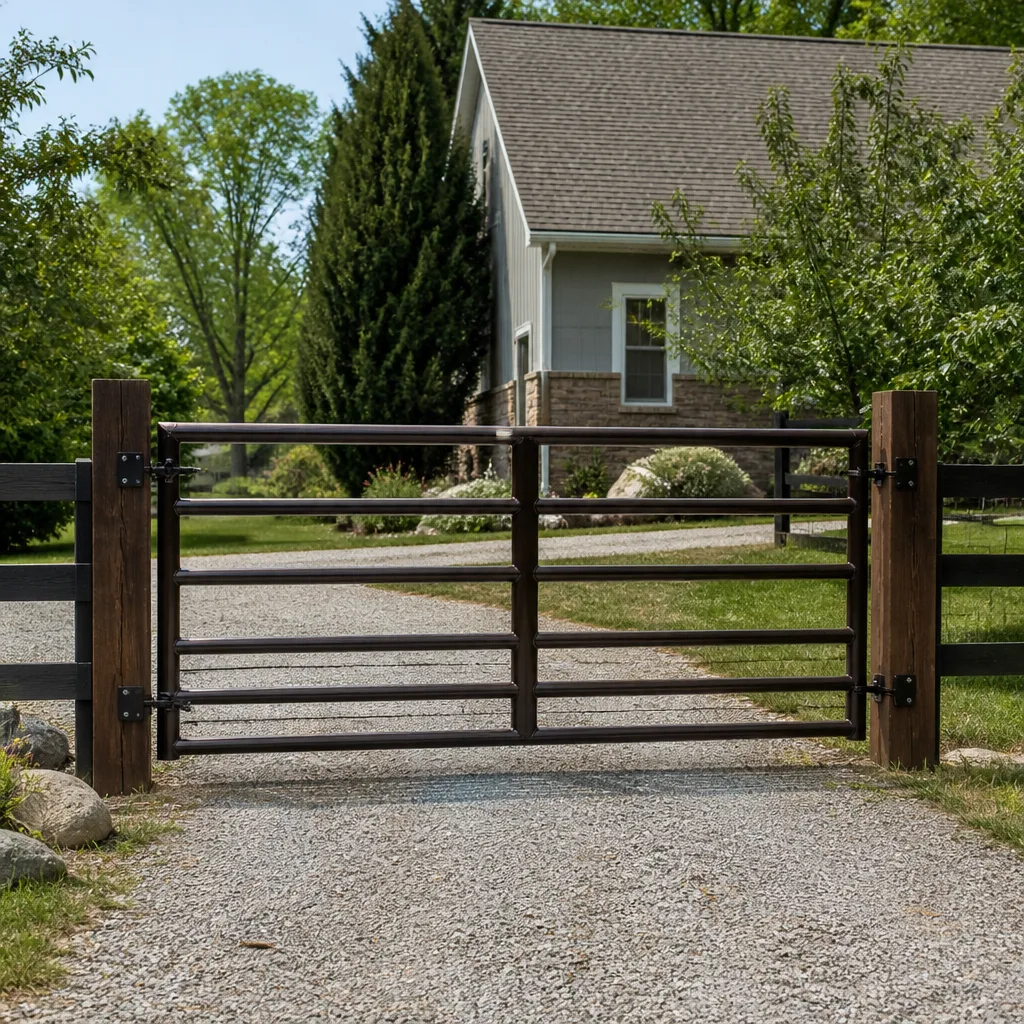 Farm & ranch
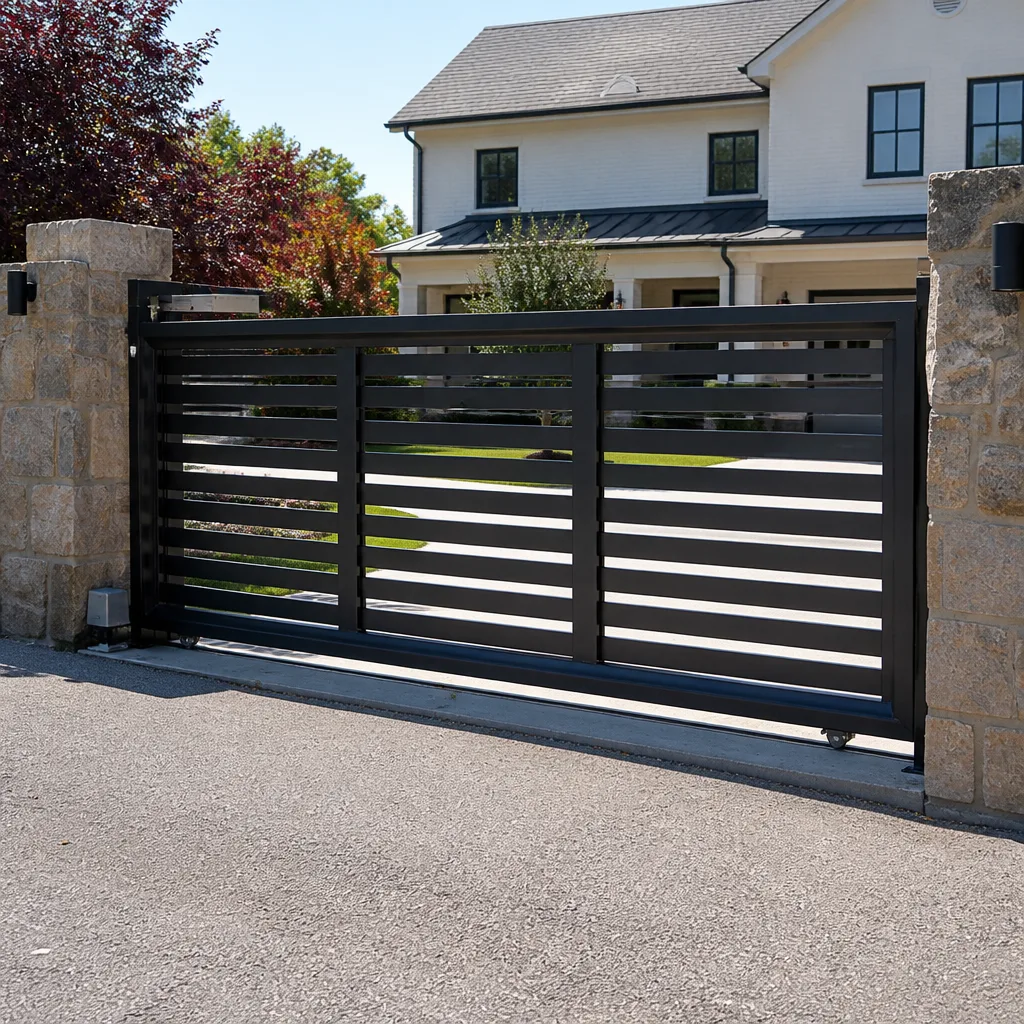 Sliding driveway gates
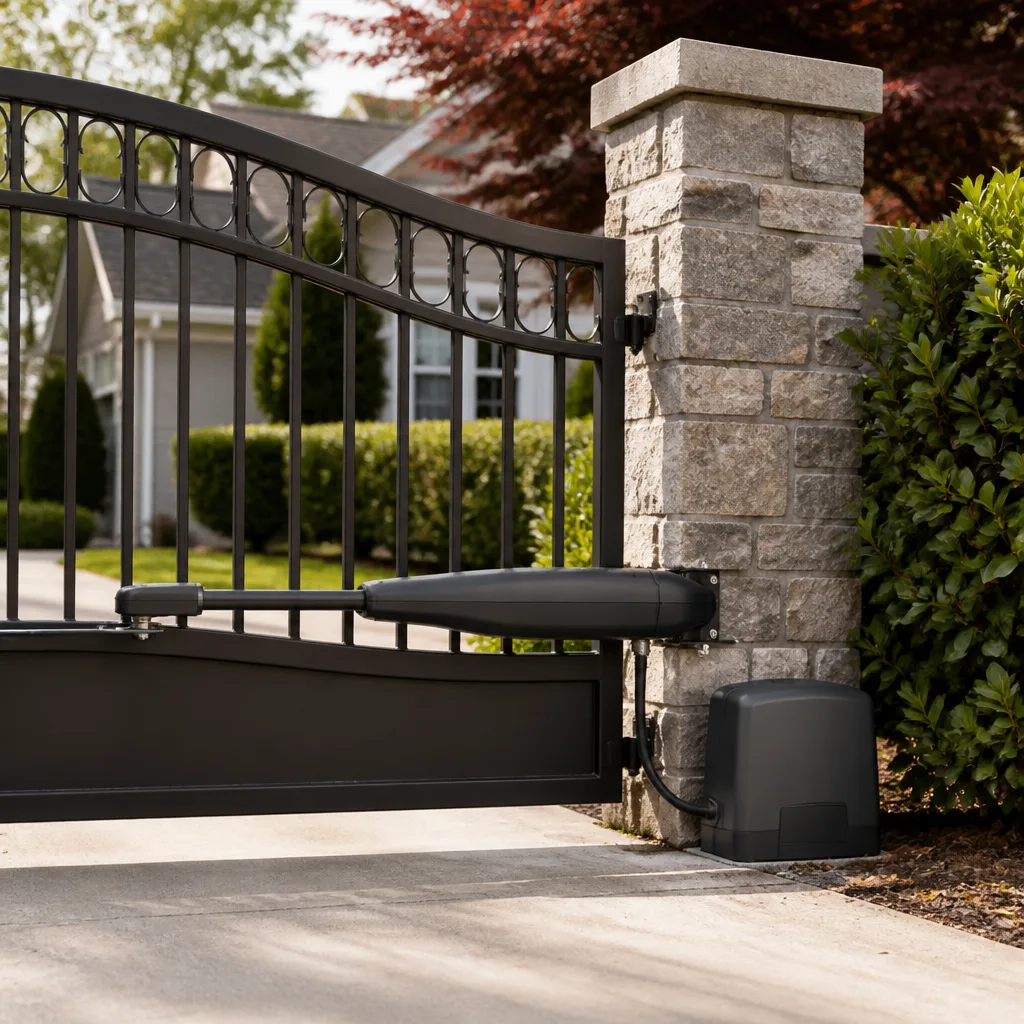 LiftMaster operators
Free on-site gate assessment - hinges, posts, and your LiftMaster or Nice gate operator checked before anything is quoted
The assessment is free and the quote is the invoice.
Get your free estimateGate Repair Emergency Preparedness Guide for West Hills Homes
Most gate failures aren’t mechanical surprises. They’re preparation gaps. The motor that quits during a power outage, the arm that jams while you’re rushing out, the gate that stays locked because nobody in the house ever learned where the manual release is. In West Hills, where steep driveways and wooded lots make a working gate part of daily access, these moments tend to arrive at the worst possible time. The 2020 wildfire evacuations across the Portland metro showed exactly how quickly a stuck gate turns into a blocked private road. This guide walks you through a concrete emergency protocol for every failure scenario: manual release by operator type, power outage steps, what to have ready before you call, how to secure a property when a gate won’t close, and what to check after the emergency passes. Fifteen minutes of prep now saves an hour of panic later.
Quick Answer
Emergency gate preparedness in West Hills comes down to three things: knowing how to manually release your specific operator without tools, keeping a written record of your gate’s brand and model where you can find it fast, and having a plan to secure the property if the gate stays stuck open. Most residential operators – LiftMaster, FAAC, BFT, and Mighty Mule included – have a manual release you can operate by hand, but the method differs by type, and practicing it before you need it is what separates a two-minute fix from a two-hour problem. When a failure goes beyond what you can safely handle, a gate specialist can diagnose and repair it, often the same day.
Styles & brands we work with
- Wrought iron
- Wood & steel frame
- Farm & ranch
- Sliding driveway gates
- LiftMaster operators
Table of Contents
- Why Gate Emergency Prep Matters in West Hills
- Manual Release Procedures by Operator Type
- Power Outage Protocol: Battery Backup and What to Do When It’s Gone
- Emergency Contact Preparation: What a Technician Needs From You
- Temporary Security When a Gate Is Stuck Open
- Post-Emergency Inspection Checklist
- Preventive Checks That Reduce Emergency Risk
- Signs Your Gate Is Heading Toward Failure
Why Gate Emergency Prep Matters in West Hills
A gate is the one piece of home infrastructure that controls whether vehicles can leave. That makes its failure mode different from a broken garage door or a dead light fixture. When a gate sticks closed, you can’t drive out. When it sticks open, your perimeter is exposed. Neither situation waits for a convenient moment, and in West Hills the terrain makes both worse: long driveways, shared private roads, and properties where the gate is the only controlled access point.
The 2020 wildfire evacuations in the Portland metro put this in sharp relief. Automated gates that failed during the evacuation trapped vehicles on private roads for over an hour while homeowners hunted for manual release procedures they’d never learned. That’s not a mechanical failure. It’s a preparation failure, and it’s solvable in about fifteen minutes.
West Hills adds a few local wrinkles. The area’s tree canopy means debris, fallen branches, and storm-driven limbs are a recurring cause of gate track obstructions and sensor misalignment. The hilly topography means many driveways sit on a slope, which puts extra load on swing operators and makes a partially open gate more likely to drift or bind. And the mix of housing – older properties with legacy operators alongside newer builds with current-generation systems – means no single release procedure covers every home.
What you need is a plan specific to your gate. Not a generic checklist, but a short document you keep somewhere you can find it in the dark: your operator brand and model, your release method, your technician’s number, and what to do if the gate won’t move at all. The sections below build that plan piece by piece.
Manual Release Procedures by Operator Type
Every powered gate has a manual release. The mechanism differs by operator type, and using the wrong method can damage the gearbox or leave the gate in a position you can’t reset. Here’s how the three most common configurations work in West Hills homes.
Swing Operators (LiftMaster and Similar)
Most residential swing operators use an arm that connects the motor to the gate leaf. The manual release is usually a keyed lever or a pull handle on the operator housing. Insert the key or pull the handle, then lift the release arm to disengage the drive. Once disengaged, the gate swings freely by hand. To re-engage, swing the gate back to its closed position and push the release arm down until it clicks. Don’t force it – if the arm won’t seat, the gate isn’t fully in the closed position.
Slide Gate Drives
Slide gate operators typically have a release lever or a manual clutch on the drive assembly. Some models use a keyed release; others use a lever you lift and hold while sliding the gate. The key point: disengage the drive before pushing the gate, never push against an engaged motor. Once released, the gate should roll smoothly along its track. If it binds, check for debris on the track or a worn roller before assuming the operator is the problem.
Underground Operators (FAAC and Similar)
Underground operators sit below grade and drive the gate from a pivot point at the bottom. The manual release is usually a keyed mechanism accessed through a cover or a release point on the gate post. Turn the key, then swing the gate by hand. Underground systems are less common in West Hills than arm-style swing operators, but when they’re installed, the release procedure is less obvious and worth learning before you need it. If you’re not sure which type you have, a gate repair visit can identify the operator and walk you through the release.
Practice Before You Need It
- Locate your manual release and confirm you have the key or tool it requires.
- Disengage the operator and swing or slide the gate by hand.
- Re-engage the operator and confirm the gate cycles normally.
- Store the key or release tool somewhere accessible from outside the gate.
If the release won’t disengage or the gate won’t move freely after release, stop. Forcing it can damage the mechanism or create a crush hazard on a heavy gate. Call a technician.
Power Outage Protocol: Battery Backup and What to Do When It’s Gone
Most modern gate operators include battery backup, but capacity varies by model and battery age. A new battery on a LiftMaster or FAAC operator may carry the gate through several cycles; an older battery may manage one or two before the gate stops mid-travel. The first step in any outage is to know whether your operator has backup and how healthy the battery is. If you’ve never checked, that’s the first thing to verify.
When backup is depleted and the gate won’t move under power, you have two options: manual release (covered above) or holding the gate in position by hand. Holding a gate manually is only safe for short periods and only on lighter residential gates. A heavy slide gate or a wide swing gate can drift or crush if you try to hold it open against gravity or wind. If you need the gate to stay in a specific position for an extended period, disengage the operator and secure the gate physically with a prop or a tie, then keep people and vehicles clear of the travel path.
A few practical notes for West Hills outages:
- Know where your operator’s battery is and how to check its charge indicator, if it has one.
- If your gate has a solar-charged backup, confirm the panel is clear of debris and shade.
- Don’t cycle the gate repeatedly during an outage to “test” the backup – each cycle drains it.
- If the gate stops mid-travel and won’t respond, disengage the operator before attempting to move it.
After power returns, don’t assume the gate is fine. The operator may need to re-learn its limits, and the battery may need replacement if it couldn’t hold a charge. That’s a job for a technician familiar with your brand – a gate motor & opener check can confirm the backup is healthy before the next outage.
Emergency Contact Preparation: What a Technician Needs From You
When a gate fails and you call for help, the difference between a fast diagnosis and a long back-and-forth is what you have ready. A technician responding to a gate emergency needs four things: the operator brand and model, a clear description of the symptom, access instructions, and a contact number that works. Store this information where you can find it without power or internet – a printed card taped inside a kitchen cabinet, a note in your phone, or a label on the operator housing itself.
What to Record
- Operator brand and model: LiftMaster, FAAC, BFT, Mighty Mule, or another brand, plus the model number from the label on the operator housing.
- Gate type: swing or slide, single or double leaf, approximate width and weight if you know it.
- Symptom description: “Gate won’t open,” “gate opens partway and reverses,” “gate stuck open after power outage,” “motor runs but gate doesn’t move.”
- Access instructions: gate code, lockbox location, where the manual release is, and whether the driveway is steep or narrow.
- Your contact number and the best time to reach you.
In our experience, a homeowner who can read off the model number and describe the symptom saves ten minutes on the phone and often gets a faster on-site diagnosis. If you don’t know your model, take a photo of the operator label and keep it in your phone. When you call Gate Repair West Hills, that photo is the fastest way to confirm we work on your system – we handle LiftMaster, FAAC, BFT, Linear, Viking, Ghost Controls, DoorKing, Elite, and Mighty Mule.
Temporary Security When a Gate Is Stuck Open
A gate stuck open is a perimeter problem, and the solution depends on how long you’ll be waiting for repair and what the gate is protecting. For a residential driveway, the goal is to make the property look occupied and limit casual access without creating a hazard. For an HOA or small commercial property, the goal is to maintain controlled access for authorized vehicles while the gate is out.
Realistic Temporary Measures
- Manual positioning: If the gate can be disengaged and moved by hand, close it manually and secure it with a chain or a prop. Don’t lock a gate in a position where it can’t be released from outside in an emergency.
- Vehicle block: Park a vehicle across the opening if the driveway allows it. This is the simplest short-term measure for a residential property.
- Temporary barrier: A portable barrier or a pair of cones won’t stop a determined intruder, but they signal that the property is monitored and create a visual deterrent.
- Lighting and visibility: Keep exterior lights on and make sure the gate area is visible from the house. A stuck gate in a dark corner is a bigger risk than one in plain view.
- Neighbor notification: On a shared private road, let neighbors know the gate is out so they can watch for unfamiliar vehicles.
What you shouldn’t do is wedge or force the gate into a closed position against the operator’s travel limits. That puts load on the gearbox and can bend the gate leaf or damage the track. If the gate won’t close under manual power, leave it open and secure the perimeter another way until a technician arrives. For a property with access control – a keypad, intercom, or fob system – a stuck-open gate also means unauthorized entry is possible, so treat the repair as a priority rather than a backlog item.
Post-Emergency Inspection Checklist
After a forced manual operation, a power restoration, or a storm event, don’t just re-engage the operator and assume everything is fine. A gate that was forced, jammed, or run on a depleted battery can have subtle damage that shows up weeks later. Run this checklist before returning the gate to automated operation.
- Inspect the gate leaf and frame: Look for bent arms, cracked welds, or a leaf that no longer hangs level.
- Check the track and rollers (slide gates): Clear debris, confirm rollers turn freely, and look for wear or flat spots.
- Test the manual release: Confirm it disengages and re-engages smoothly. If it binds, the mechanism needs attention.
- Cycle the gate under power: Run a full open-close cycle and watch for hesitation, reversal, or unusual noise.
- Test the safety devices: Photo eyes, safety edges, and loop detectors should stop or reverse the gate when triggered. Don’t skip this – a safety device that failed during the emergency is a crush hazard.
- Check the battery: If the operator ran on backup during an outage, confirm the battery is holding charge. A battery that couldn’t carry the gate through the outage needs replacement.
- Confirm the limits: The gate should stop fully open and fully closed. If it’s short-cycling or over-traveling, the limits need resetting.
If any step fails, stop and call a technician. A gate that passes a visual check but fails a safety test is not ready for automatic operation. We diagnose and repair gate-specific electrical and mechanical faults, and we work on the brand you already have rather than pushing a replacement.
Preventive Checks That Reduce Emergency Risk
Most gate emergencies start as small issues that went unnoticed. A few minutes of inspection a few times a year catches most of them before they become a stuck gate.
- Clear the track and travel path: In West Hills, fallen branches and leaf debris are the most common cause of slide gate obstructions. Check after storms.
- Test the manual release: Once a season, disengage and re-engage the operator. A release that’s seized from disuse is useless in an emergency.
- Check the battery: If your operator has backup, test it under load rather than trusting the indicator light.
- Inspect the safety devices: Photo eyes and safety edges should be tested monthly. A dirty lens or a misaligned sensor is a common cause of phantom reversals.
- Listen for changes: A new grind, squeal, or hesitation in the gate’s cycle is an early warning. Address it before it becomes a failure.
If you’re planning a new gate or replacing an aging operator, the prep work starts at installation. A gate installation that accounts for your driveway slope, your access needs, and your power reliability will fail less often than one sized for a flat lot. Ask about manual release accessibility and battery backup at the design stage, not after the first outage.
Signs Your Gate Is Heading Toward Failure
Gate failures rarely happen without warning. The operator that quits during an outage usually showed a weak battery for weeks. The gate that jams mid-travel usually had a binding track or a worn roller. Knowing the signs gives you time to schedule a repair before an emergency forces one.
- Gate reverses without obstruction: Usually a misaligned or dirty safety sensor, but can also indicate a failing control board.
- Motor runs but the gate doesn’t move: A stripped gear, a disengaged release, or a broken arm connection.
- Gate moves slowly or hesitates: A weakening motor, a binding track, or a battery that’s losing capacity.
- Gate stops mid-travel: Limit switch drift, a failing encoder, or a control board fault.
- Remote or keypad works intermittently: A receiver issue, a dying battery in the remote, or a wiring fault at the access point.
- Unusual noise: Grinding, squealing, or clicking from the operator or the gate hardware.
If you notice any of these, don’t wait for the gate to fail completely. A diagnostic visit can identify the cause and repair it before it strands you. Systems from LiftMaster, FAAC, BFT, and Mighty Mule all have known failure patterns, and a technician who works on your brand regularly will recognize them quickly.
Common Mistakes to Avoid
- Never learning the manual release until you need it. The middle of an evacuation or a power outage is the worst time to figure out which lever disengages your operator. Practice it once, in daylight, before you need it.
- Forcing a jammed gate. Pushing a gate against an engaged motor or a binding track can bend the leaf, strip the gearbox, or create a crush hazard. Disengage first, then move it by hand.
- Assuming battery backup means weeks of power. Backup capacity varies by model and battery age, and an old battery may carry the gate through one or two cycles. Test it under load.
- Ignoring a stuck-open gate. Leaving a gate open and unattended for days exposes your perimeter and, on a property with access control, can allow unauthorized entry. Secure it or schedule a repair promptly.
- Skipping the safety device test after an emergency. A photo eye or safety edge that failed during the emergency is a crush hazard. Test every safety device before returning the gate to automatic operation.
- Calling without the model number. A technician who knows your operator brand and model can bring the right parts and diagnose faster. Keep the label photo on your phone.
- Letting a small symptom become a failure. A reversing gate or a slow motor is an early warning. Addressing it on a normal schedule is cheaper and less stressful than an emergency call.
See the difference
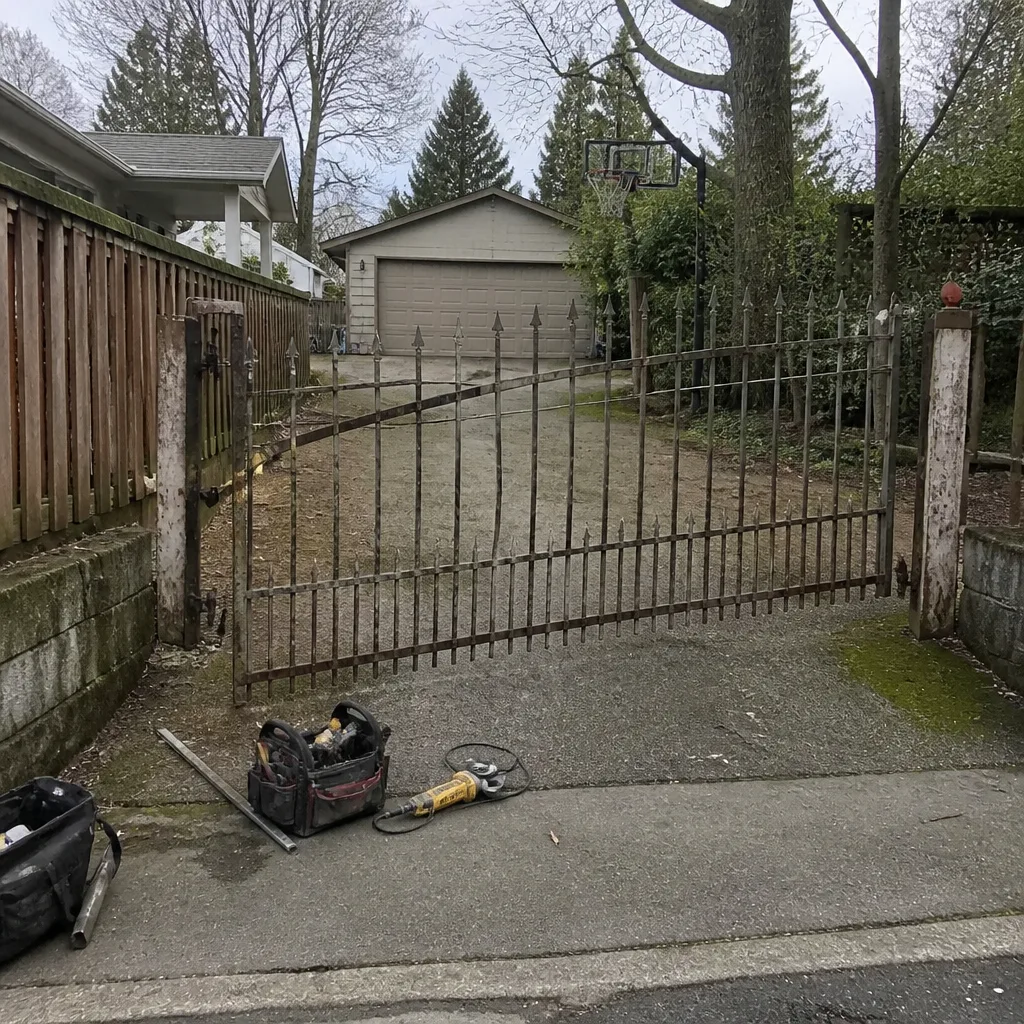 Before
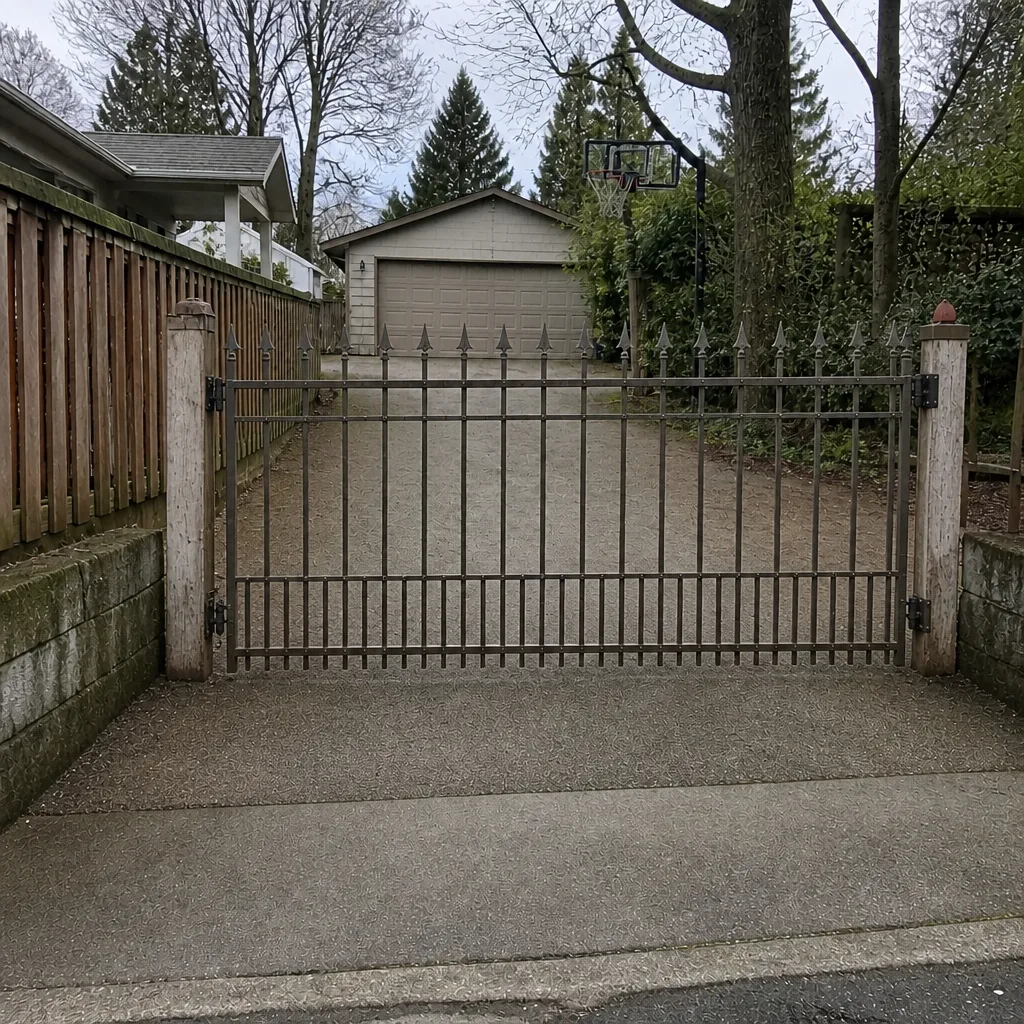 After
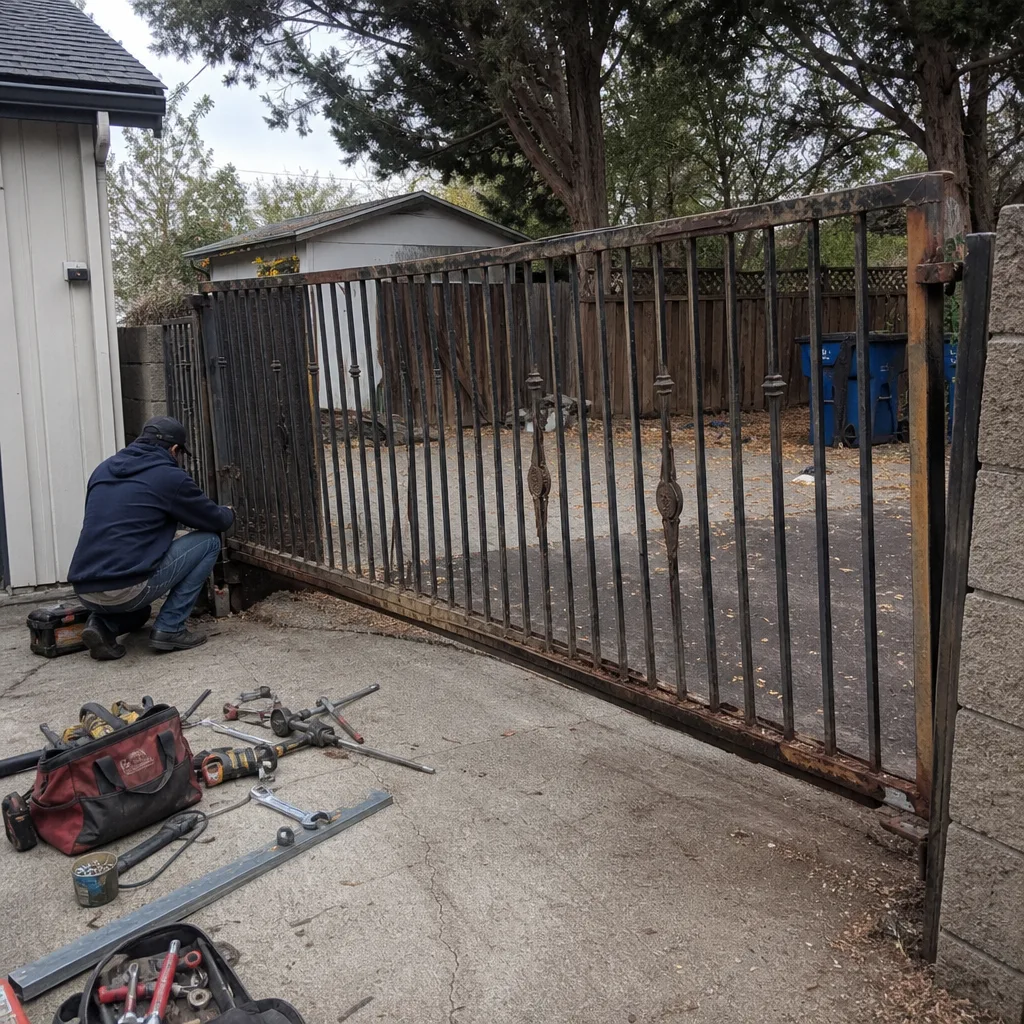 Before
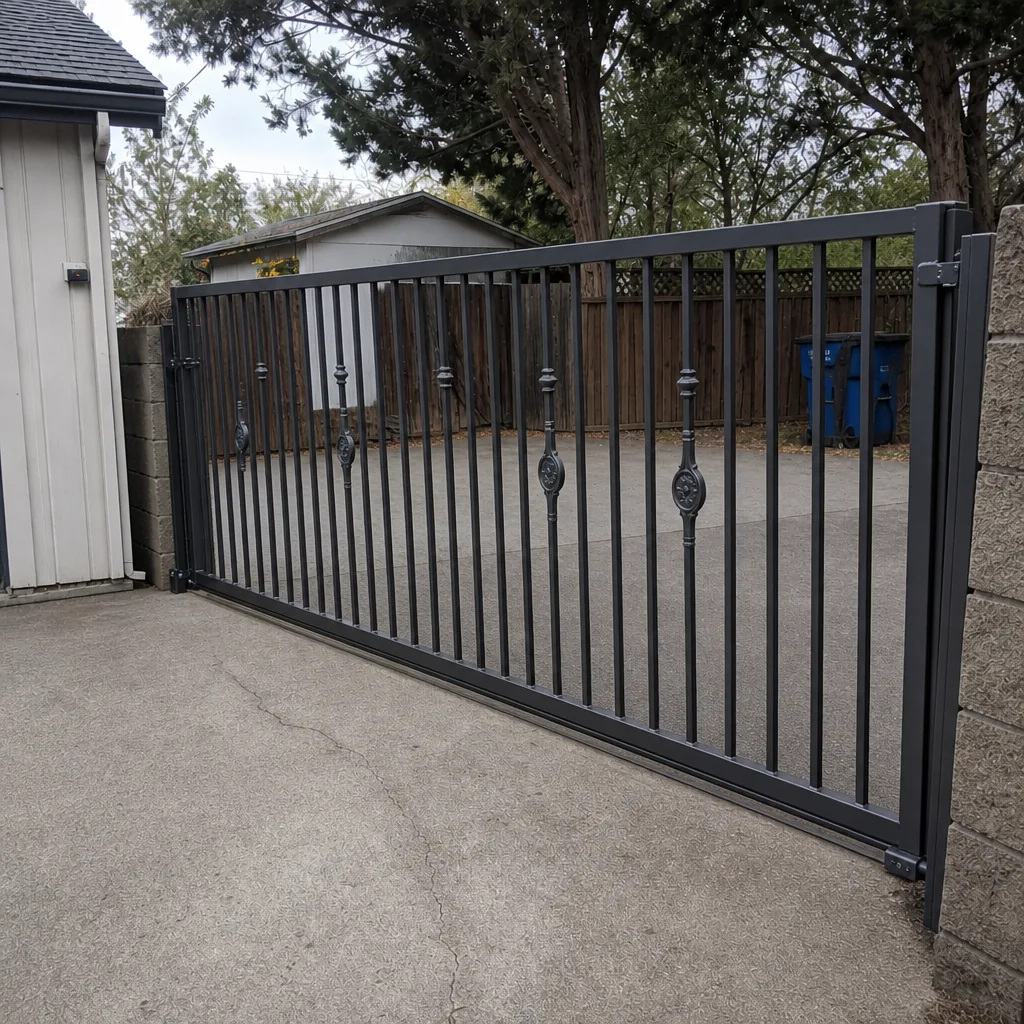 After
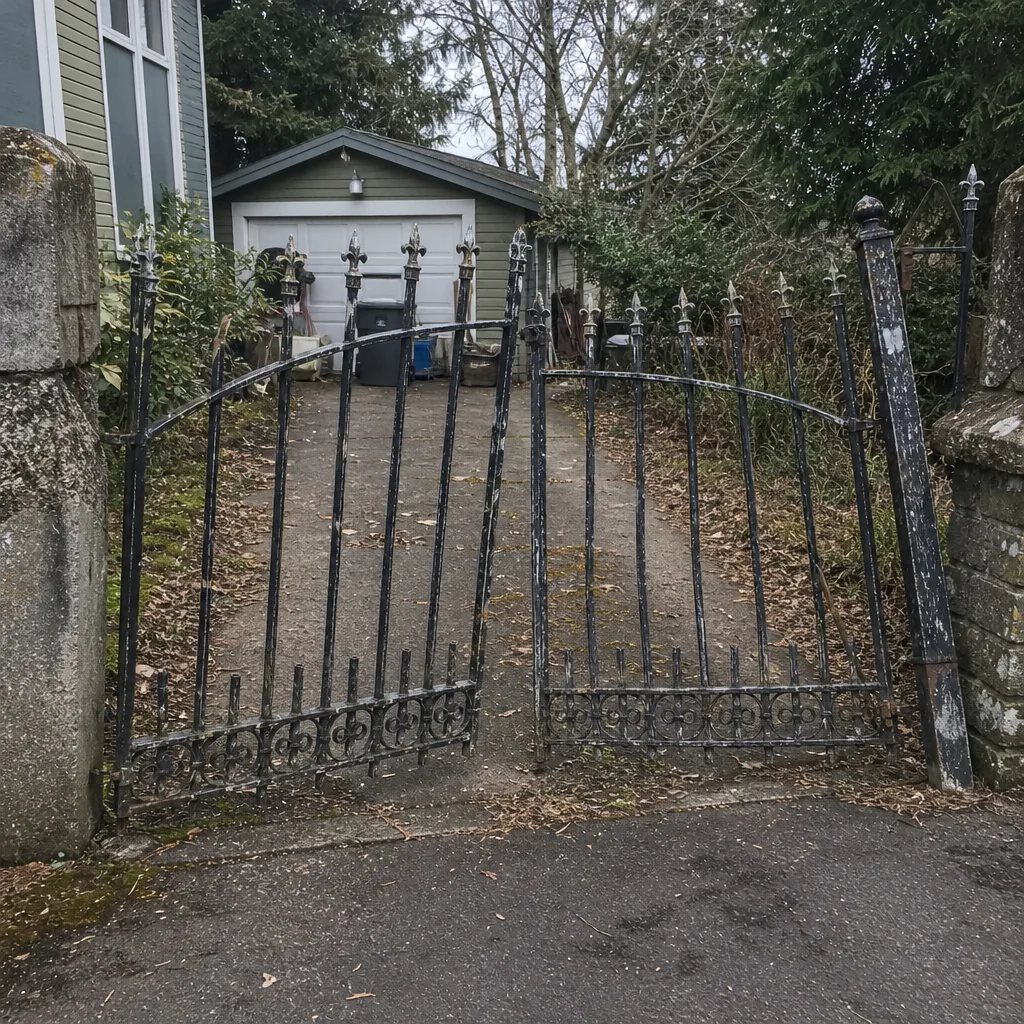 Before
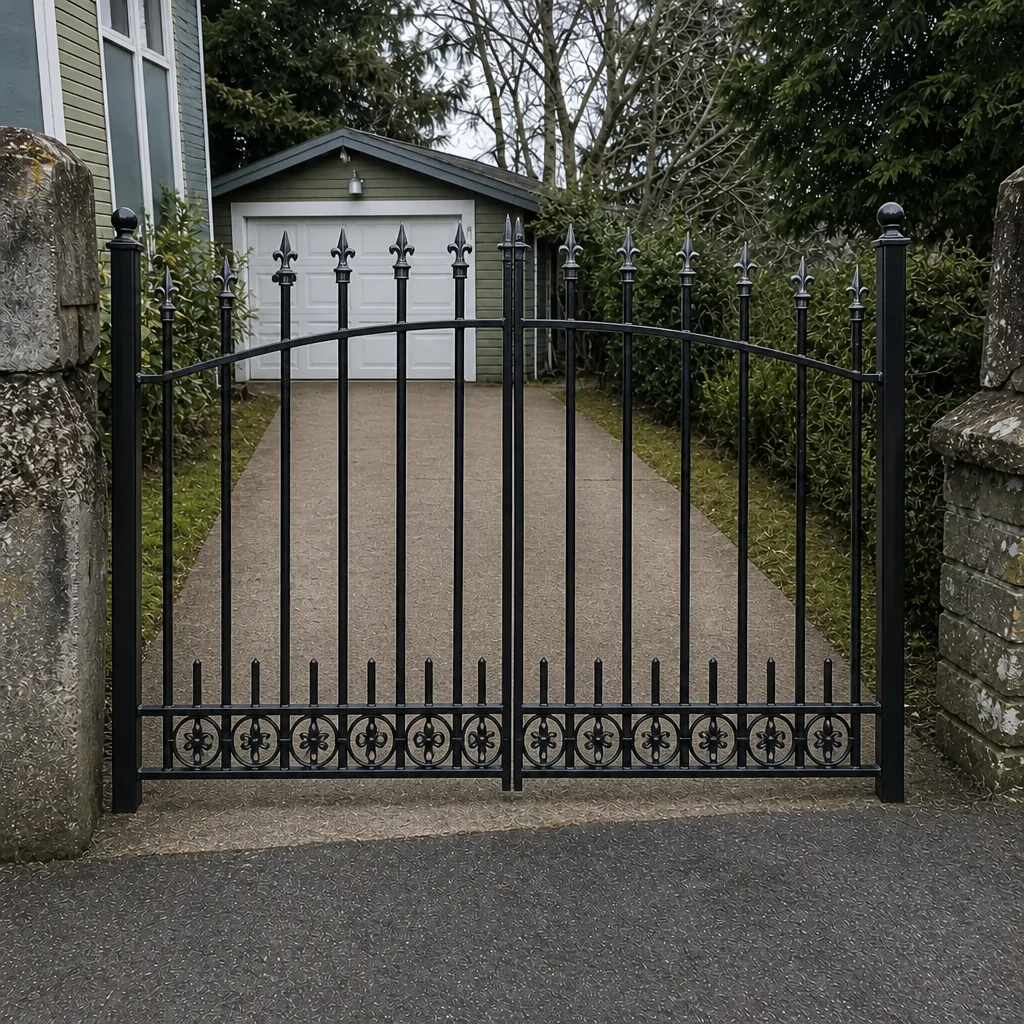 After
When to Call a Professional
Call a professional when the manual release won’t disengage, when the gate won’t move freely after release, when the operator runs but the gate doesn’t, when a safety device fails a test, or when the gate is stuck in a position you can’t safely secure. Also call if you’ve never identified your operator brand and model – a technician can confirm it and walk you through the release procedure before an emergency forces the issue. Gate Repair West Hills offers free estimates in West Hills – call (877) 492-4403. We work on LiftMaster, FAAC, BFT, Linear, Viking, Ghost Controls, DoorKing, Elite, and Mighty Mule, and we’re open Sunday through Friday, 7am to 7pm.
Frequently Asked Questions
It depends on your operator type. Swing operators usually have a keyed lever or pull handle on the housing that disengages the drive arm; slide gate drives have a release lever or clutch; underground operators use a keyed release at the gate post. Disengage the operator before moving the gate by hand, and re-engage it only when the gate is back in its closed position. If you’re not sure which type you have, call (877) 492-4403 and we can help you identify it.
Capacity varies by operator model and battery age. A new battery may carry the gate through several cycles; an older battery may manage one or two before the gate stops. Don’t cycle the gate repeatedly to test it during an outage – each cycle drains the backup. If the battery can’t hold the gate through an outage, it needs replacement. Call (877) 492-4403 for a battery and motor check.
Disengage the operator and try closing the gate by hand. If it won’t close, secure the perimeter another way: park a vehicle across the opening, use a temporary barrier, keep exterior lights on, and notify neighbors on a shared road. Don’t force the gate against its travel limits. Then call (877) 492-4403 to schedule a repair – estimates are free.
Have your operator brand and model number, your gate type (swing or slide), a clear description of the symptom, your access instructions, and a contact number ready. A photo of the operator label is the fastest way to confirm we work on your system. Call (877) 492-4403 with those details and we can diagnose faster.
No. We’re closed Saturday. We’re open Sunday through Friday, 7am to 7pm. If your gate fails on a Saturday, call (877) 492-4403 and we’ll book you for Sunday. For a gate stuck open, secure the perimeter temporarily until we arrive.
Not until you’ve tested it. Run a full open-close cycle under power, confirm the limits stop the gate fully open and fully closed, and test every safety device – photo eyes, safety edges, and loop detectors. If any safety device fails, don’t return the gate to automatic operation. Call (877) 492-4403 for a post-emergency inspection.
The Bottom Line
Gate emergency preparedness in West Hills isn’t complicated, but it does require action before the emergency. Learn your manual release method by operator type – swing, slide, or underground – and practice it once in daylight. Know whether your operator has battery backup and test it under load. Keep your brand, model, symptom, and access instructions where you can find them without power. If a gate stays stuck open, secure the perimeter with realistic temporary measures rather than forcing the mechanism. And after any forced manual operation or outage, run the post-emergency checklist before returning the gate to automatic operation. A gate that fails at the wrong moment is an infrastructure problem, and the fix starts with fifteen minutes of preparation now.
When a failure goes beyond what you can safely handle, call Gate Repair West Hills at (877) 492-4403 for a free estimate. We work on the brand you already have – LiftMaster, FAAC, BFT, Linear, Viking, Ghost Controls, DoorKing, Elite, and Mighty Mule – and we handle mechanical and electrical gate faults in a single visit. Open Sunday through Friday, 7am to 7pm.
Written by the team at Gate Repair West Hills.