Last updated November 24, 2026
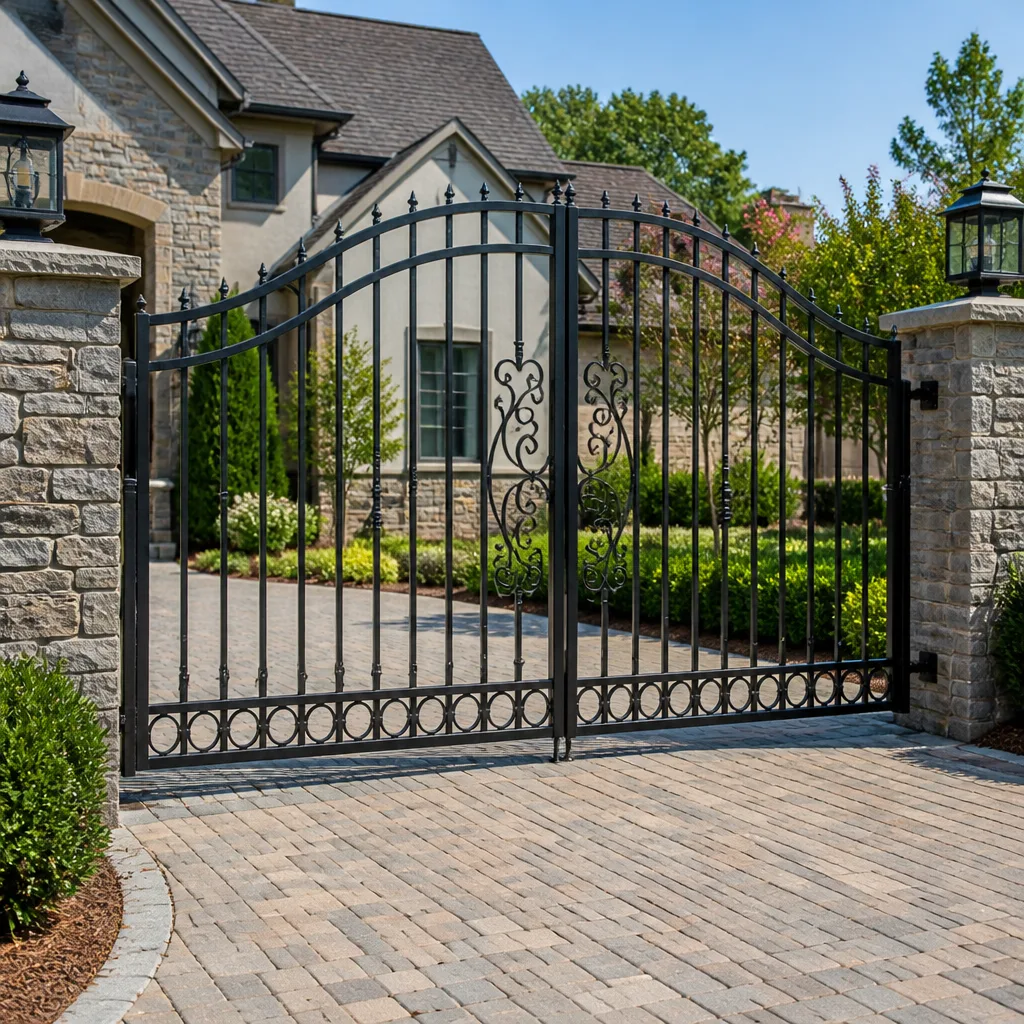 Wrought iron
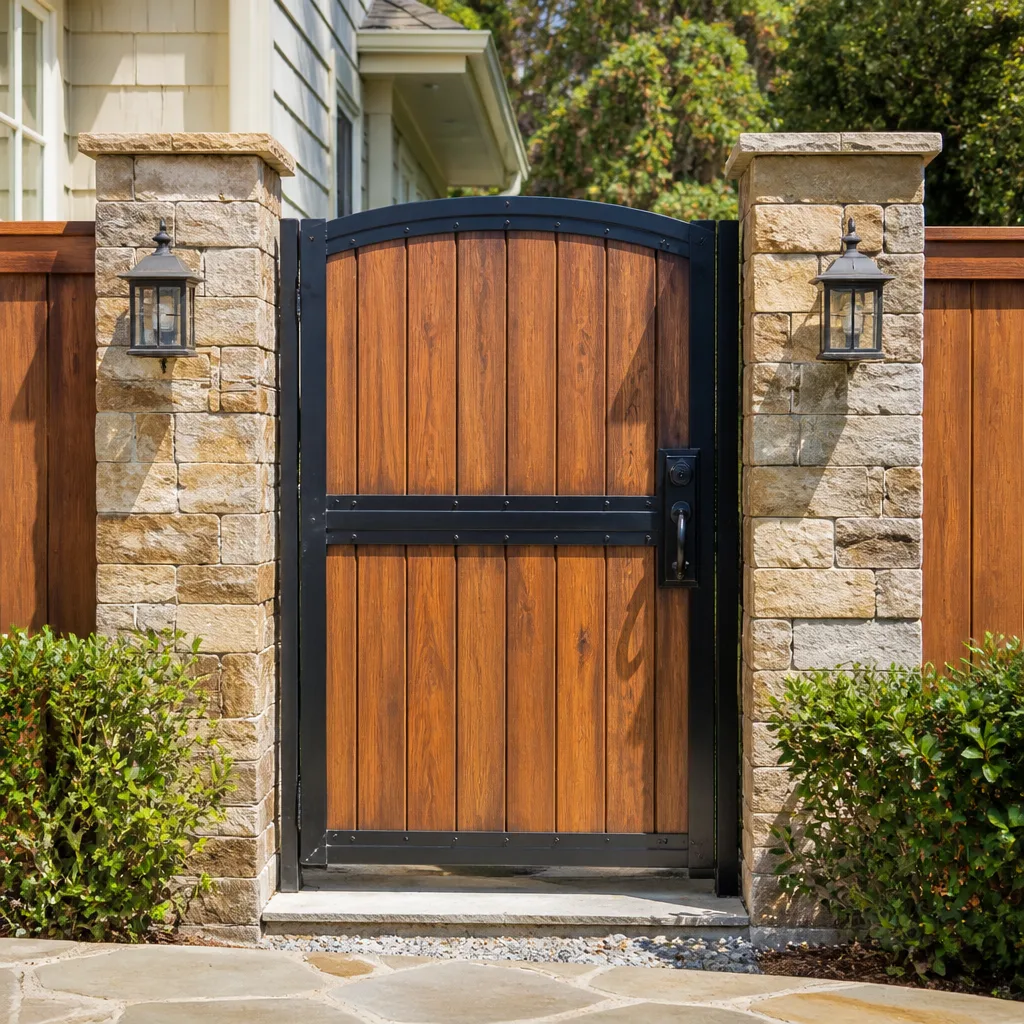 Wood & steel frame
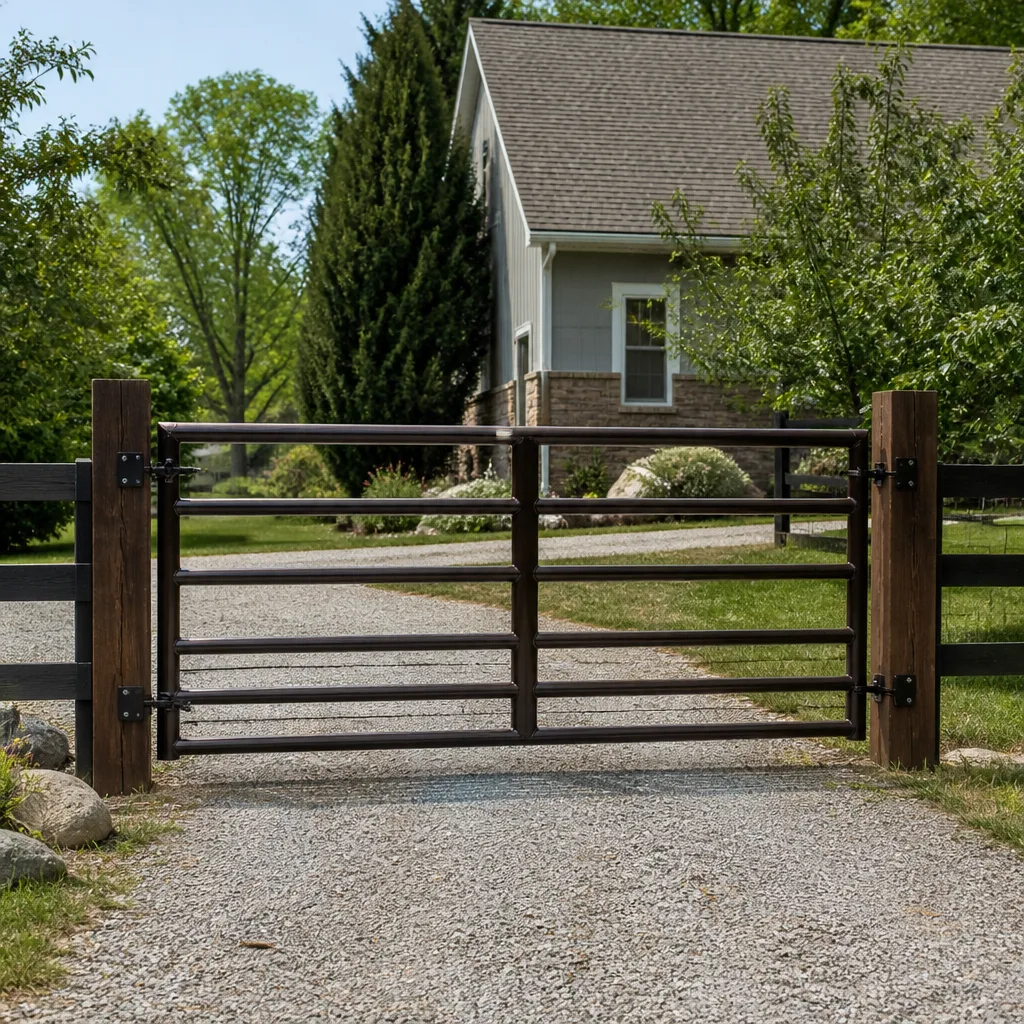 Farm & ranch
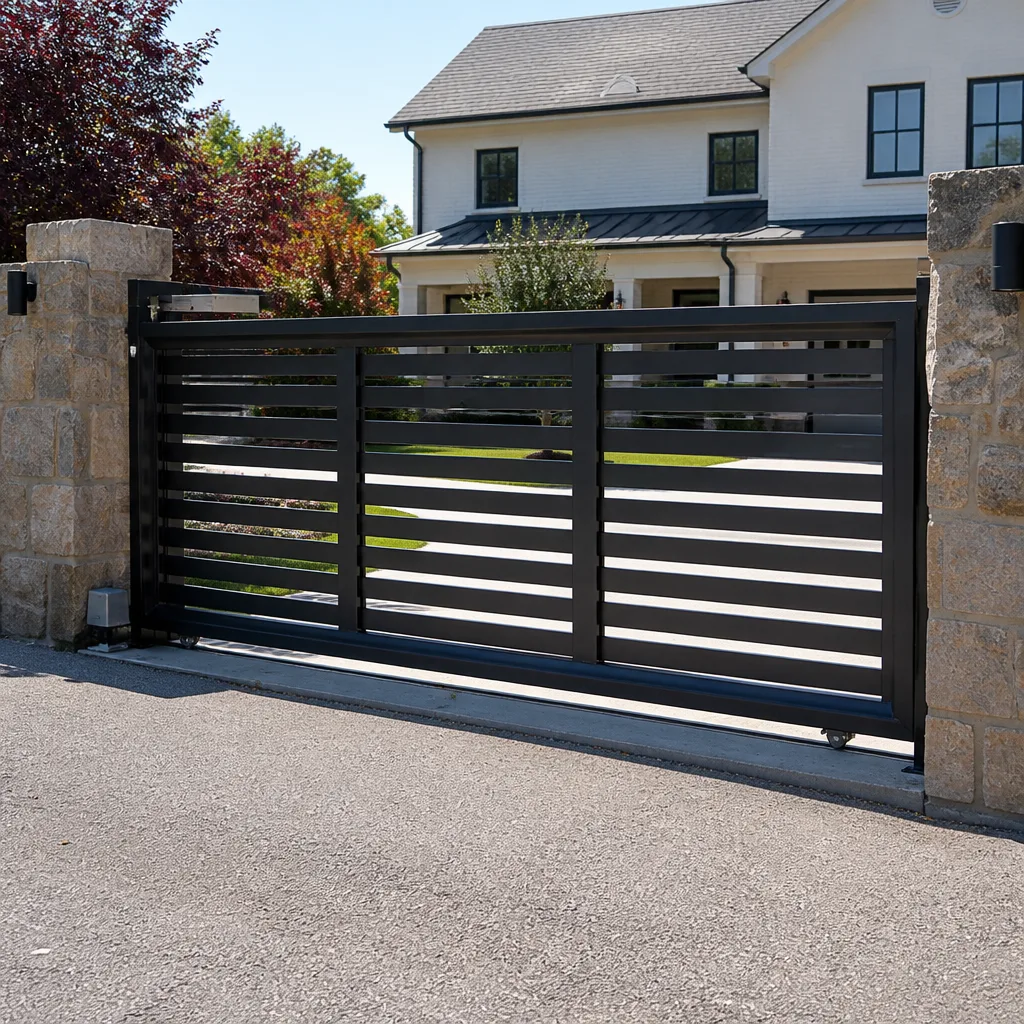 Sliding driveway gates
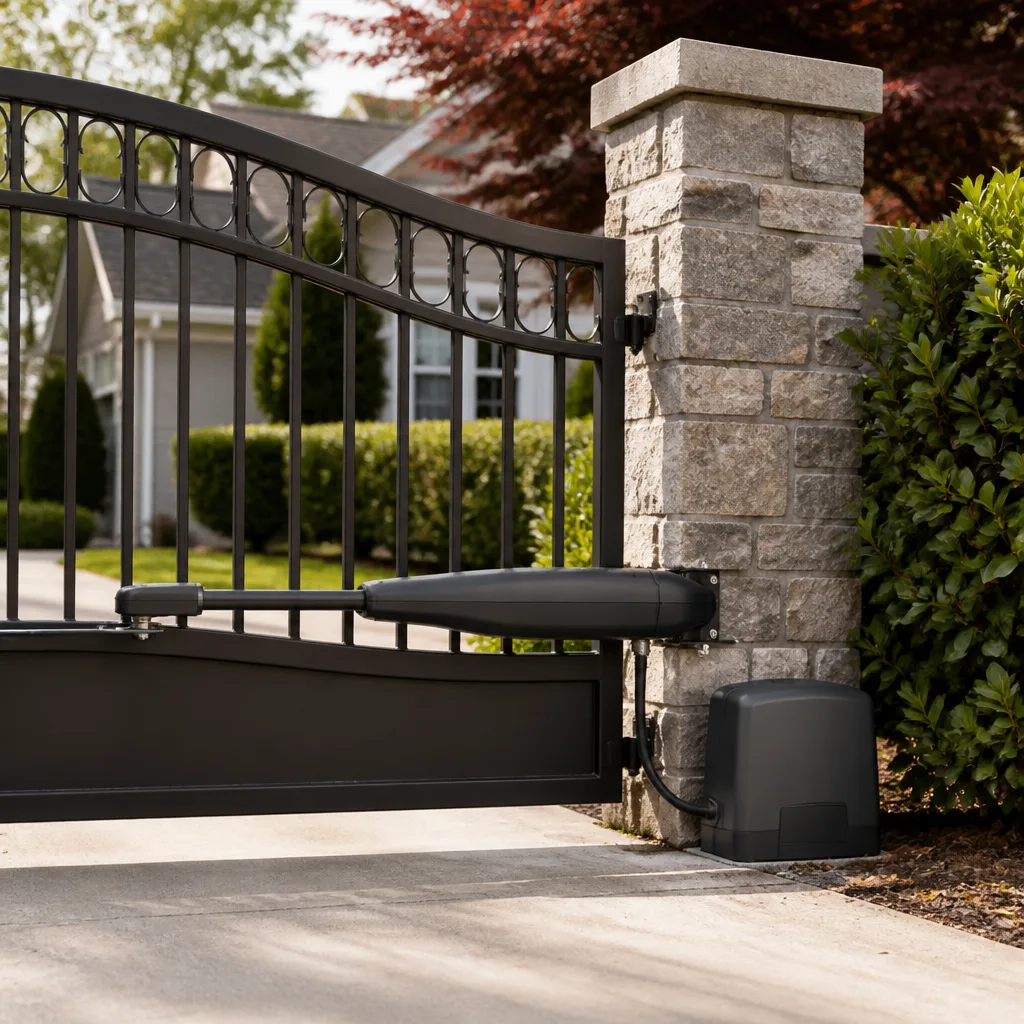 LiftMaster operators
Free on-site gate assessment - hinges, posts, and your LiftMaster or Nice gate operator checked before anything is quoted
The assessment is free and the quote is the invoice.
Get your free estimateGate Repair Permits, Codes & Inspections in West Hills, OR: What You Need to Know
Here’s the part most homeowners don’t hear until closing day: a gate operator wired to its own 20-amp circuit in Oregon almost always needs an electrical permit, and plenty of installations skip that step. Nobody notices for years. Then a title search turns up work with no record behind it, and a sale stalls while everyone tries to figure out who signed off on what. That’s the gap this guide fills. We’ll walk through when gate work in West Hills actually triggers a permit, how Washington County handles submissions, what UL 325 entrapment protection looks like on a residential gate, and how the HOA rules layered over many West Hills properties interact with the county’s requirements. It’s the paperwork side of gate ownership, written plainly.
Quick Answer
Most residential gate repairs in West Hills, Oregon do not require a permit – swapping a control board, replacing a roller, adjusting a hinge, or reprogramming a keypad is maintenance. What does require one is new electrical work: a hardwired gate operator on a dedicated circuit, a new power run, or anything tied into your home’s electrical panel. Low-voltage control wiring between the operator and its safety devices is generally treated as exempt. When in doubt, call Washington County before you drill.
Styles & brands we work with
- Wrought iron
- Wood & steel frame
- Farm & ranch
- Sliding driveway gates
- LiftMaster operators
Table of Contents
- When does gate work need a permit in West Hills?
- Low-voltage automation wiring and the Oregon electrical code
- The Washington County permit process, step by step
- UL 325 compliance: what entrapment protection your gate legally needs
- HOA overlay rules in West Hills and how they stack with county permits
- What the grandfather clause covers, and what it doesn’t
- What paperwork to keep after an inspection
- Common mistakes to avoid
- When to call a professional
When does gate work need a permit in West Hills?
The short line: repairs rarely need a permit, and electrical work usually does. Oregon’s residential code treats a gate as a structural and electrical assembly, so the answer depends on which part of the gate you’re touching. A residential driveway swing gate that fails to latch, drags on its hinges, or refuses to reverse can be repaired without pulling a permit. A gate operator that needs a new dedicated circuit run from your panel is a different category entirely.
Here’s the breakdown we walk homeowners through in West Hills:
- No permit typically required: replacing a gate motor or opener with a like-for-like unit on existing wiring, swapping a control board, repairing hinges, rollers, stops, or latches, replacing a keypad or remote, reprogramming access control for a DoorKing or Linear system, adjusting an arm or chain.
- Permit typically required: a brand-new hardwired circuit for a gate operator, a new power run to a gate location that has never had one, relocating an existing circuit, or adding a subpanel to feed the gate.
- Usually a separate question: a new gate structure itself. Whether a new pier, post footing, or full gate assembly needs a building permit depends on the scope and on how your lot is zoned, so it’s worth a call to the county before breaking ground.
West Hills lots sit on slopes and hillsides, and that matters here. A gate on a graded driveway often needs its posts set to proper footing depth, and a footing that’s deeper or larger than a simple like-for-like replacement can push a job past the repair line. If a gate contractor is replacing piers rather than bolting a new operator onto existing ones, ask the county whether the work crosses into structural territory. We’ve seen plenty of West Hills properties where the electrical side stayed clean but the structural side needed a conversation.
Low-voltage automation wiring and the Oregon electrical code
The single most misunderstood piece of Oregon gate code is the line between power wiring and control wiring. The 120-volt feed that runs from your home’s electrical panel to the gate operator is line voltage, and it falls under the electrical permit rules. The low-voltage wires that run from the operator out to the photo eyes, safety edges, keypad, and loop detector are control wiring, and they’re generally exempt. Two systems, two different sets of rules, and the confusion causes real problems on inspections.
In practice, on a typical West Hills residential gate:
- Panel to operator: line voltage, typically a dedicated 20-amp circuit. That’s permit territory if it’s new work.
- Operator to safety devices: low voltage. Photo eyes, safety edges, keypads, and intercom wiring usually don’t require a permit.
- Operator to accessories: a plug-in transformer feeding a DoorKing access panel or a Linear receiver is low voltage and typically exempt.
Where this gets tricky is when a contractor runs line voltage and low voltage in the same conduit or through the same junction box without separation. Oregon’s electrical rules care about that, and an inspector will flag it. We’ve opened plenty of West Hills gate enclosures where a previous installer pulled 120-volt and 24-volt wiring through one raceway with no barrier between them. It works, until it doesn’t, and it can fail an inspection even on a repair if the inspector is looking at the whole assembly.
One more thing worth saying plainly: 120-volt wiring isn’t a homeowner project. If you’re considering running power to a gate yourself, don’t. A licensed electrician handles that portion, and the gate specialist handles everything downstream of the disconnect. Those are different trades for good reason.
The Washington County permit process, step by step
Washington County runs its own building and electrical permitting, and for a gate operator circuit the process is straightforward if you know the sequence. Homeowners can pull an electrical permit in their own name in most cases; contractors pull it in theirs. Here’s how a typical West Hills gate electrical permit moves through the county:
- Determine scope. Confirm whether you’re adding a new circuit, relocating one, or replacing the operator on existing wiring. Only the first two need the permit.
- Submit the application. Washington County accepts electrical permit applications through its online portal. You’ll need the property address, a description of the work, the amperage and voltage of the circuit, and the name of the licensed electrician if a contractor is doing the line-voltage work.
- Pay the fee and receive the permit. Fees vary by scope, so ask the county for the current schedule rather than trusting a number you read online.
- Schedule the inspection. After the circuit is run and the operator is connected, the county inspects the electrical work. Turnaround varies with the county’s schedule, so build buffer into your timeline if a gate is coming out of service during the job.
- Get the sign-off and keep it. The inspection record is the document that protects you later.
The documentation a West Hills homeowner should retain after sign-off is simple but important: the permit number, the final inspection record showing it passed, the electrician’s invoice and license information, and the gate contractor’s written description of scope. Keep these with your home records. This is exactly the sort of file a title company asks for when a buyer’s inspector notices a gate operator and wants to know whether the circuit was permitted. If you don’t have it, you’ll be reconstructing the history years later, and that’s harder than it sounds. The permit record is the one piece of gate paperwork that outlives the gate.
UL 325 compliance: what entrapment protection your gate legally needs
If your gate operates automatically, UL 325 is the standard that governs it, and it’s not optional in any practical sense. UL 325 requires that an automated gate have at least one means of entrapment protection, and the type depends on how the gate moves. Oregon doesn’t have a separate gate-specific statute that overrides this; the standard is baked into how operators are listed and how inspectors and insurers evaluate them. On a residential swing or slide gate, the practical answer is: your operator needs a working primary entrapment protection device, typically photo eyes, and often a secondary device like a safety edge.
Here’s what that looks like on the ground:
- Photo eyes at the gate’s path that detect an obstruction and reverse or stop the gate. Required on most residential automated gates and the first thing an inspector checks.
- Safety edges on the leading edge of the gate leaf or the slide gate’s closing face, which reverse the gate on contact.
- Inherent entrapment protection in the operator itself, which is what the operator’s listing covers but is not a substitute for external devices.
- Audible and visual warnings where required by the operator listing, which is common on commercial installations and increasingly on residential.
We work on the brand you already have, whether it’s a LiftMaster operator on a swing gate or a Viking unit on a slide gate, and the UL 325 side is where we spend a lot of our diagnostic time. Photo eyes that were bypassed, safety edges that were disconnected, and operators installed with no external entrapment protection at all show up regularly on West Hills properties. That’s not just a code problem. It’s a safety problem, and it’s the first thing that matters if the gate ever closes on a person.
One caveat worth stating directly: safety edges and photo eyes are wired low voltage, but they’re connected to line-voltage equipment. If the wiring looks damaged or the operator housing is compromised, don’t troubleshoot it yourself. A trained technician should handle anything inside the operator enclosure.
HOA overlay rules in West Hills and how they stack with county permits
Many of the residential developments tucked into the West Hills have HOA architectural review, and that changes the gate permit conversation. County approval and HOA approval are separate processes, and you usually need both. The county permits the electrical and structural work; the HOA approves the appearance and often the placement. A permit from Washington County does not override an HOA’s design standards, and an HOA approval does not satisfy the county.
What HOA review commonly covers on a West Hills gate:
- Gate height, material, and color, which are often matched to the surrounding architectural character.
- Where the gate sits relative to the property line and the setback.
- The visibility of the operator, photo eyes, and any access control pedestal from the street.
- Whether an electric gate is allowed at all on certain lots or in certain sections.
- Landscaping and screening requirements around the gate hardware.
The order that works: read your HOA’s architectural guidelines first, submit the design to the architectural review committee, then pull the county permit once the design is approved. Doing it in reverse means resubmitting to the county if the HOA requires changes. In our experience working on West Hills gates, the HOA review is usually the slower of the two, so starting there saves time. If your property isn’t in an HOA, this whole layer drops away and the county is the only gatekeeper.
What the grandfather clause covers, and what it doesn’t
Old gate automation systems get a lot of mileage out of the phrase “it’s grandfathered.” Sometimes that’s true, and sometimes it’s wishful thinking. What grandfather protection generally covers is a system that was lawfully installed and code-compliant at the time it was built, still operating as it was originally permitted. It does not cover a system that was never permitted in the first place, and it does not cover new work you do to an old system. That last point is where West Hills homeowners get surprised.
The distinction that matters:
- Grandfather protects: an original, permitted, code-compliant gate automation system that still works as designed, even if today’s standard would be stricter.
- Grandfather does not protect: a system installed without permits, a system that was modified by an unpermitted installer, or any new work that upgrades or substantially replaces the operator.
- Grandfather typically ends at the upgrade: replace the operator and you’re generally held to the current entrapment protection standard, not the standard in force when the original was installed.
So when a West Hills homeowner asks whether they can keep an old non-compliant operator because it’s grandfathered, the honest answer is: maybe, until you replace it. And once you replace it, expect to comply with UL 325 as it exists today, which means working photo eyes and typically a safety edge. That’s true whether or not the original install was permitted. A repair tech who swaps in a new operator without bringing the safety devices up to current standard leaves you holding the exposure. If you’re upgrading, budget for the entrapment devices alongside the operator.
What paperwork to keep after an inspection
The single best thing a West Hills homeowner can do for the future value of a gate is keep a clean file. It costs nothing and it solves an enormous number of problems down the road. What belongs in the file:
- The county permit number and the final inspection sign-off.
- The electrician’s invoice and license information for any line-voltage work.
- The gate contractor’s written scope, including the operator brand and model, and the entrapment devices installed.
- The operator manual, especially the UL 325 listing page, which documents the entrapment protection the unit was approved for.
- Photographs of the installation before wallboard, landscaping, or fencing went up around it, if applicable.
None of this is exotic. It’s the same file you’d keep for a water heater or a panel upgrade. And it’s exactly what a buyer’s inspector, an insurance adjuster, or a future gate technician will want to see. In West Hills, where gates are often set back behind landscaping and away from the house, a technician arriving cold has no way to know the history. The file fills that gap.
Common Mistakes to Avoid
- Assuming a new operator on old wiring needs no permit. A like-for-like replacement on existing, previously permitted wiring usually doesn’t. But many West Hills operators were installed on circuits that were never permitted. Confirm what’s actually behind the wall before you assume.
- Running low-voltage control wiring through the same conduit as line voltage. It saves a pull and creates an inspection problem. Separation matters, and inspectors look for it.
- Replacing an operator without upgrading entrapment protection. A new operator is new work. UL 325 as it stands today applies, which usually means photo eyes and often a safety edge. Skipping this because the original was grandfathered leaves you exposed.
- Getting county approval without HOA approval, or the other way around. West Hills has both layers on many properties. The HOA review is often the slower one, so start there.
- Throwing away the inspection record after the sign-off. That one document is the difference between a smooth home sale and a stalled one. Keep it with your title documents.
- Bypassing photo eyes to make a gate close. A gate that won’t close because the photo eyes see an obstruction is telling you something. Bypassing them is the single most common unpermitted modification we find, and it converts a safety device into a hazard.
- Hiring a general handyman for electrical work at the gate. Line voltage and low voltage live in the same enclosure. A gate specialist diagnoses and repairs the wiring and the mechanical failure together, and a handyman who doesn’t know the divider between them creates problems that show up later.
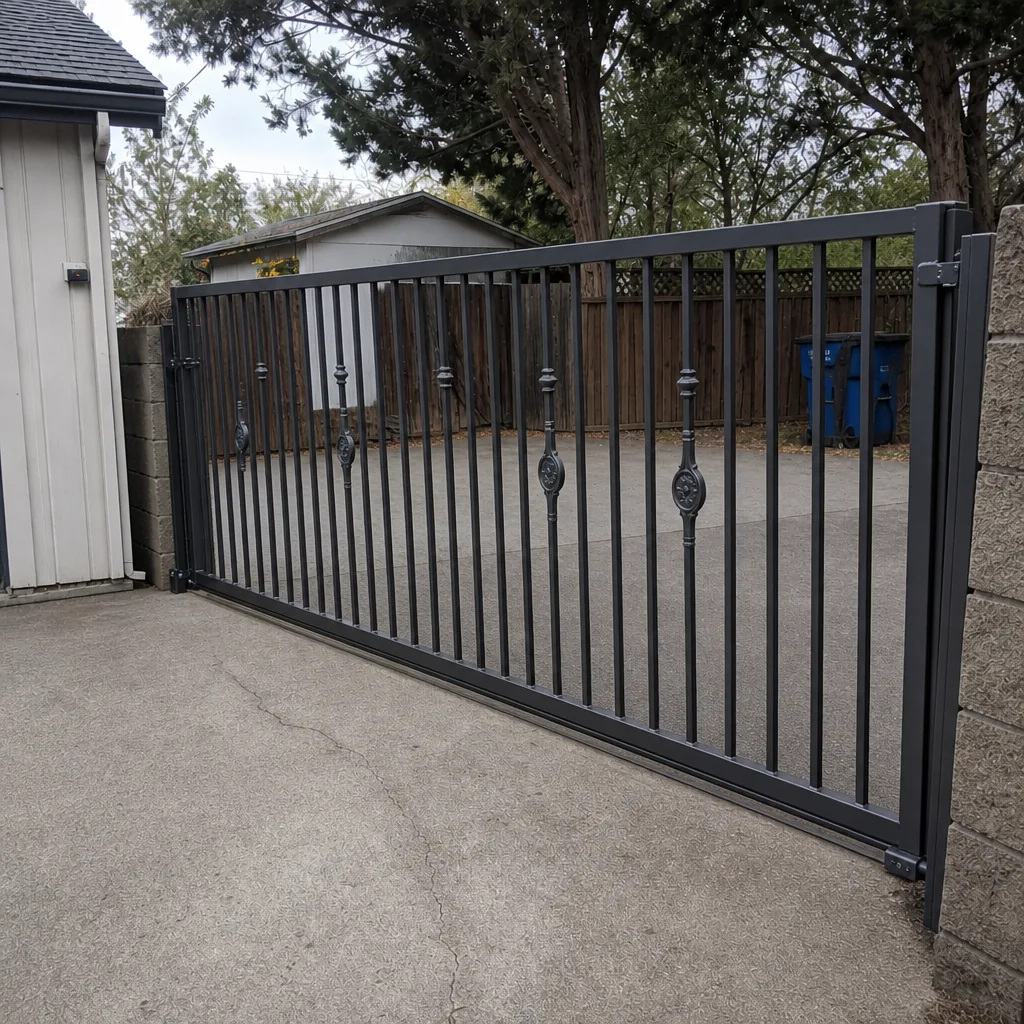
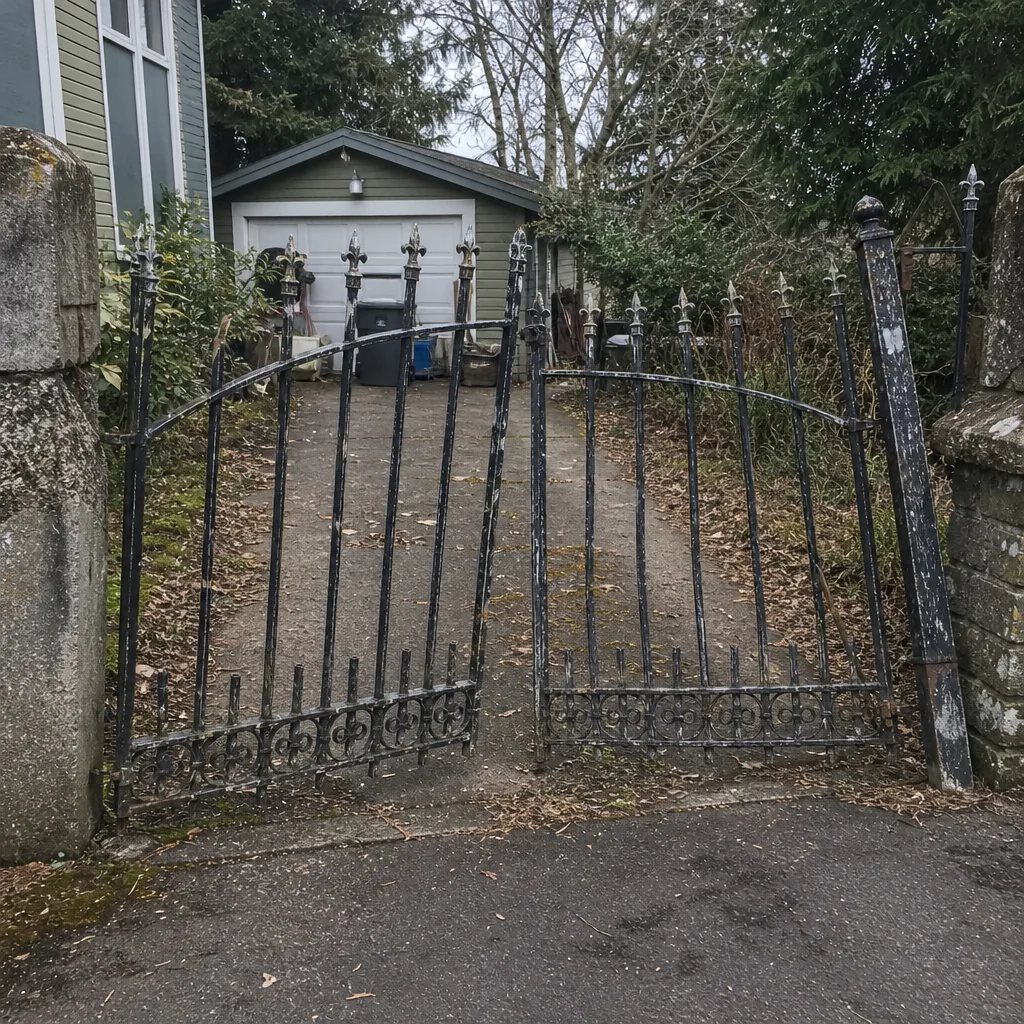
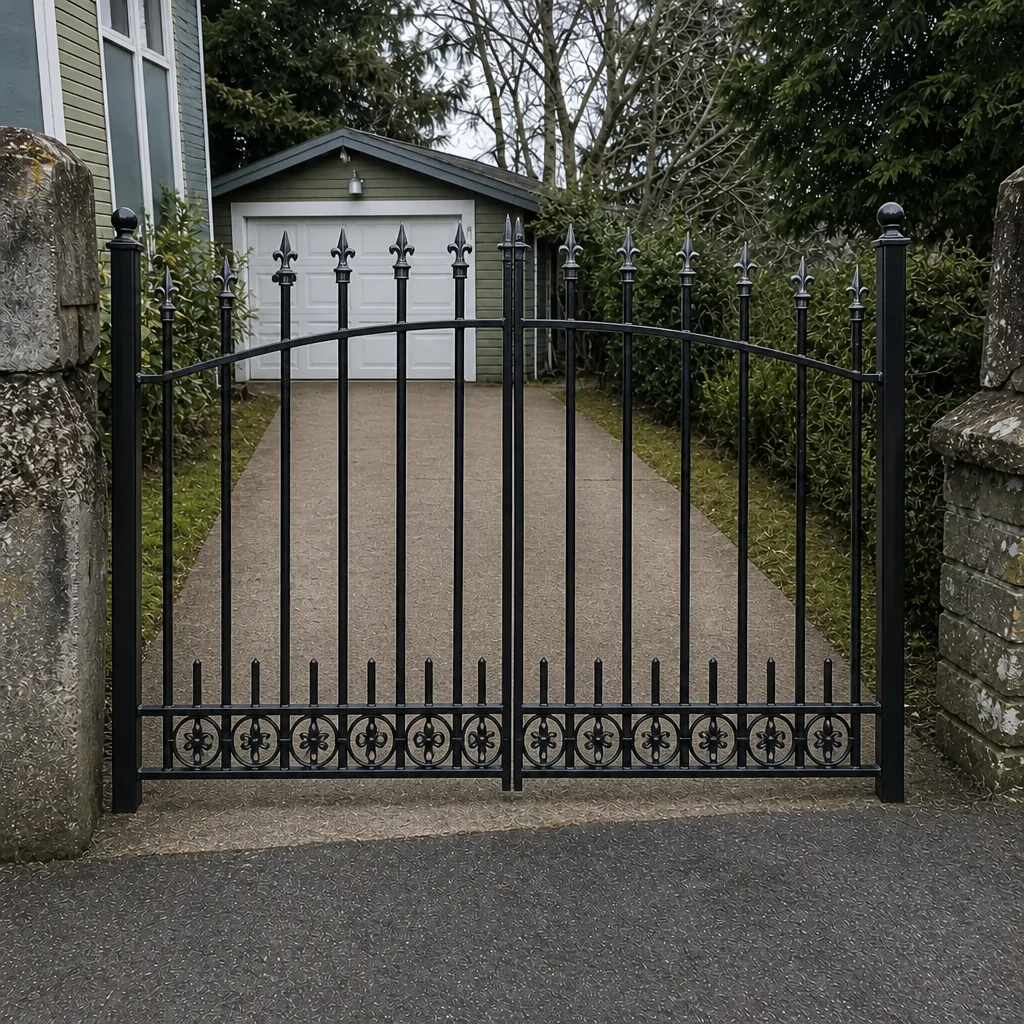
See the difference
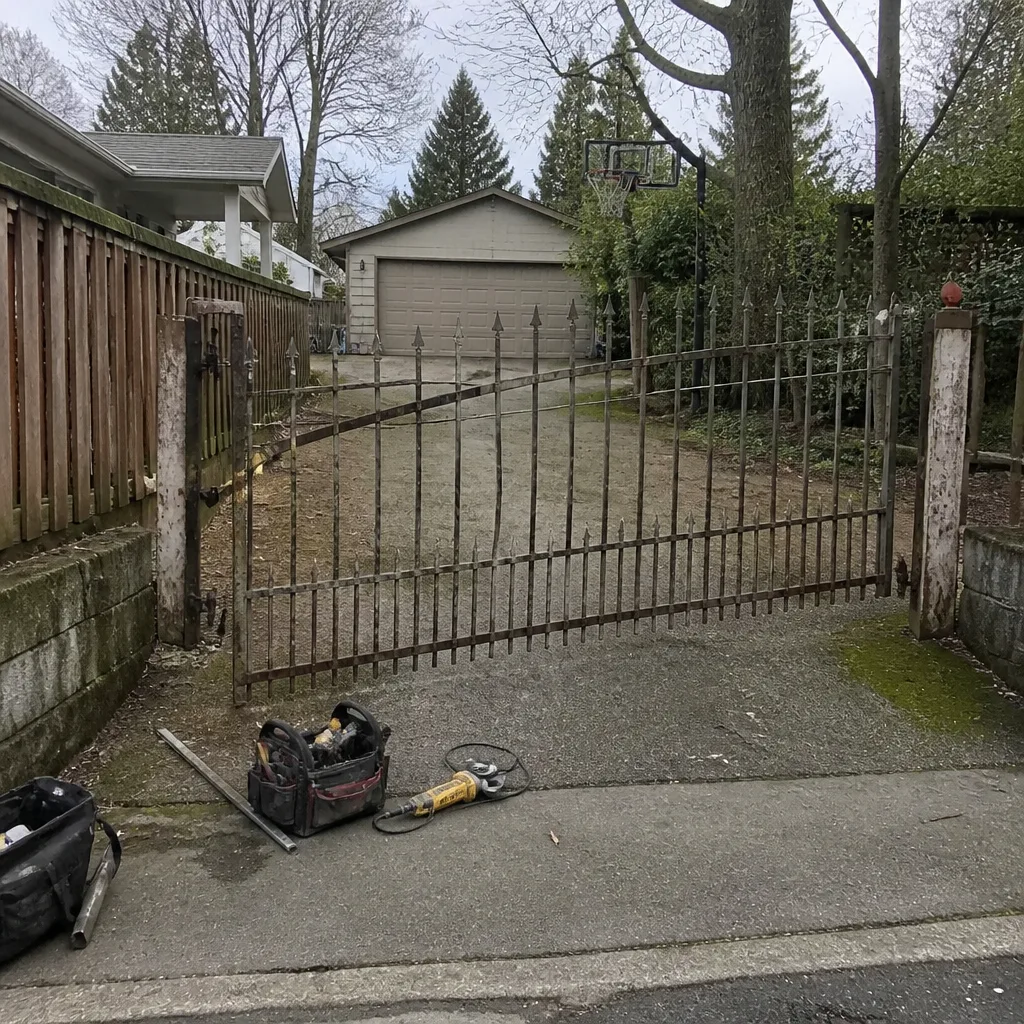 Before
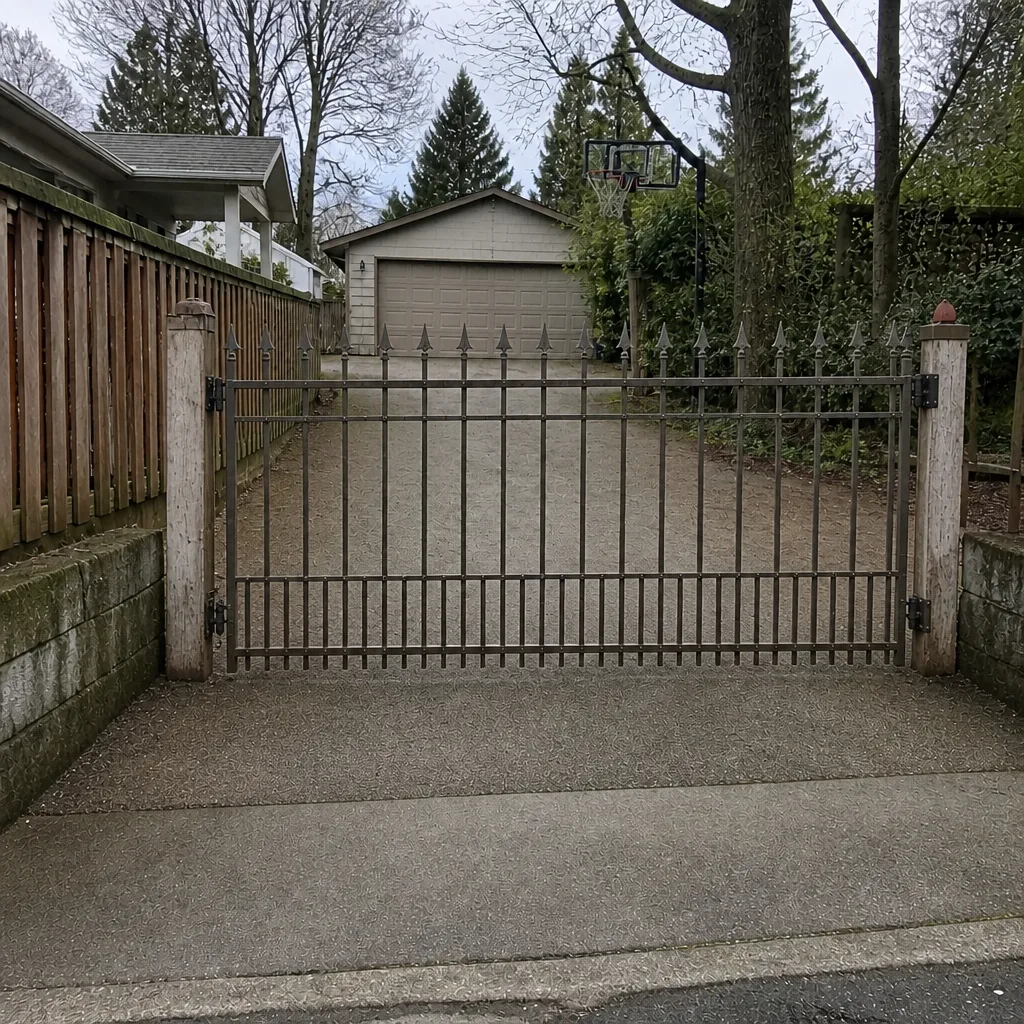 After
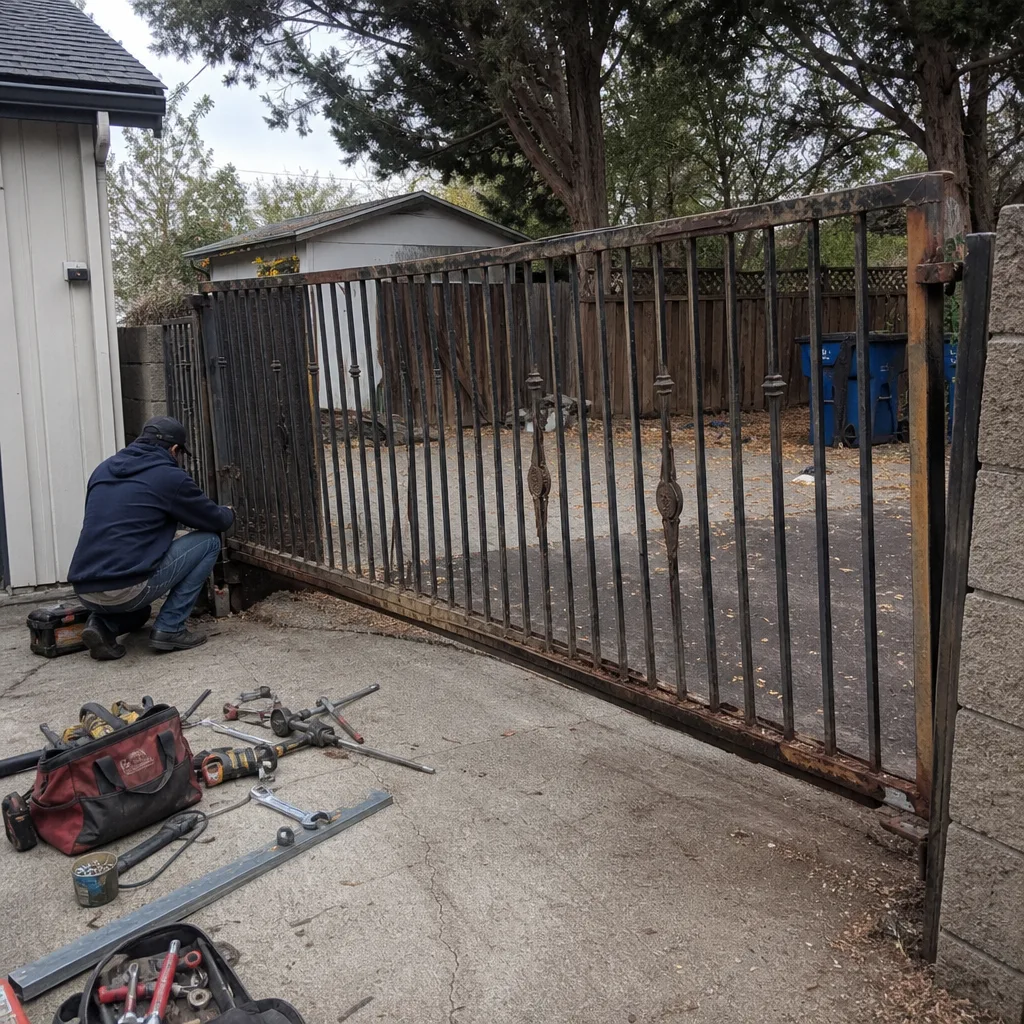 Before
 After
 Before
 After
When to Call a Professional
Call a gate specialist when the problem is inside the operator enclosure, when a safety device has stopped working, or when a repair has drifted into work that needs a permit. If your gate won’t reverse, if the photo eyes have been bypassed, if a gate motor is behaving erratically, or if you’re considering a new operator or power run, that’s the moment to bring in a trained technician. Don’t run line voltage to a gate yourself. Don’t troubleshoot an operator housing with damaged wiring. And don’t let a generalist swap a component inside a safety system without knowing what standard it needs to meet. Whether it’s a Ghost Controls kit on a swing gate or a DoorKing access panel at a small commercial entrance, the diagnosis and the paperwork belong in the same conversation. Gate Repair West Hills offers free estimates in West Hills – call (877) 492-4403.
Frequently Asked Questions
Usually no, if you’re replacing the opener with a like-for-like unit on existing, previously permitted wiring. A permit is generally required when the job involves new line-voltage work such as a new dedicated circuit, a new power run, or relocating an existing circuit. Confirm the status of the existing wiring with Washington County before you assume a replacement is exempt. Call (877) 492-4403 for an exact quote – estimates are free.
Generally yes. Low-voltage control wiring between the operator and its safety devices, keypads, and receivers is typically exempt, while the 120-volt feed from your panel to the operator is not. Mixing the two in the same conduit can still create an inspection problem, so keep them separated. Call (877) 492-4403 for an exact quote – estimates are free.
Your operator needs at least one working means of entrapment protection under UL 325, which typically means photo eyes on a residential swing or slide gate and often a safety edge as well. The specific requirement depends on the operator’s listing. If your photo eyes have been bypassed or your safety edge is disconnected, that’s a defect worth fixing before anything else. Call (877) 492-4403 for an exact quote – estimates are free.
Repairs that don’t change the gate’s appearance usually don’t need HOA review; a new gate, a new operator visible from the street, or any change to height, material, or placement commonly does. County permits and HOA approvals are separate requirements, and you usually need both when the work is new. Read your HOA’s architectural guidelines before you file anything with the county.
Keep the permit number, the final inspection sign-off, the electrician’s invoice and license information, the gate contractor’s written scope including the operator brand and model, and the operator manual. This file is what a title company or buyer’s inspector will ask for. Losing it means reconstructing the history later, and that’s harder than it needs to be.
Possibly, until you replace or substantially modify it. Grandfather protections generally cover a lawfully installed, code-compliant system still operating as originally permitted, and they typically end when you install a new operator. At that point you’re held to the current UL 325 entrapment protection standard. If you’re upgrading, plan for photo eyes and a safety edge at the same time. Call (877) 492-4403 for an exact quote – estimates are free.
The Bottom Line
Most gate repairs in West Hills don’t need a permit, and the ones that do are specific: new line-voltage wiring, new power runs, and anything that touches the electrical panel. Low-voltage control wiring is generally exempt, but mixing line and low voltage in the same conduit is the mistake that fails an inspection. Keep the paperwork. Comply with UL 325 when you install a new operator, even if the old one was grandfathered. Get HOA approval before you file with Washington County, not after. And when the work involves line voltage or an operator enclosure, bring in a gate specialist who diagnoses the electrical and mechanical fault together. From manual swing gates to fully automated access control, that’s the work we do.
For a free estimate anywhere in West Hills, call Gate Repair West Hills at (877) 492-4403. We work on the brand you already have, and we’ll tell you honestly whether your repair crosses into permit territory. Whether it’s a LiftMaster motor or a BFT control board, the diagnosis starts the same way: with a look at what’s actually on your property.
You can start with the basics on our Gate Repair West Hills page, or go straight to gate repair, gate installation, and gate motor & opener for the service side of what this guide covers on paper.
Written by the team at Gate Repair West Hills.