Last updated November 24, 2026
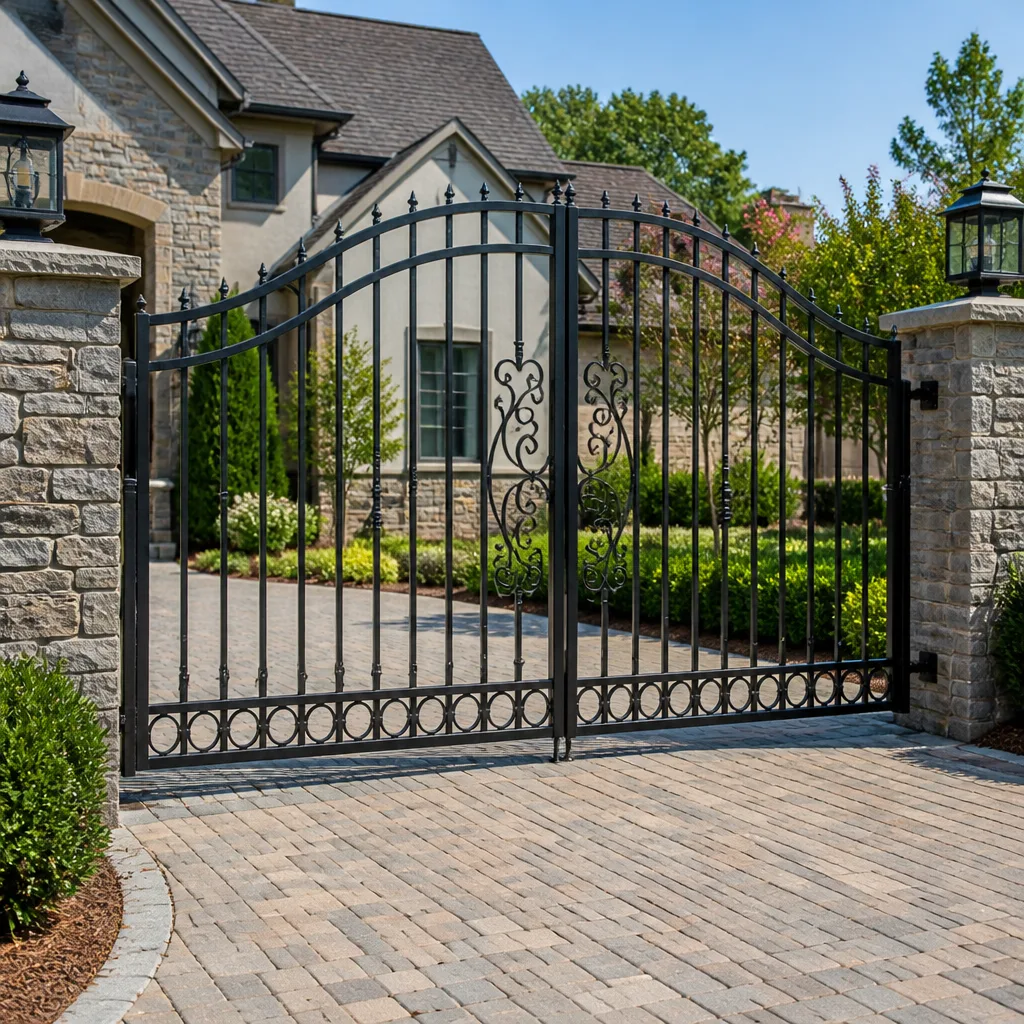 Wrought iron
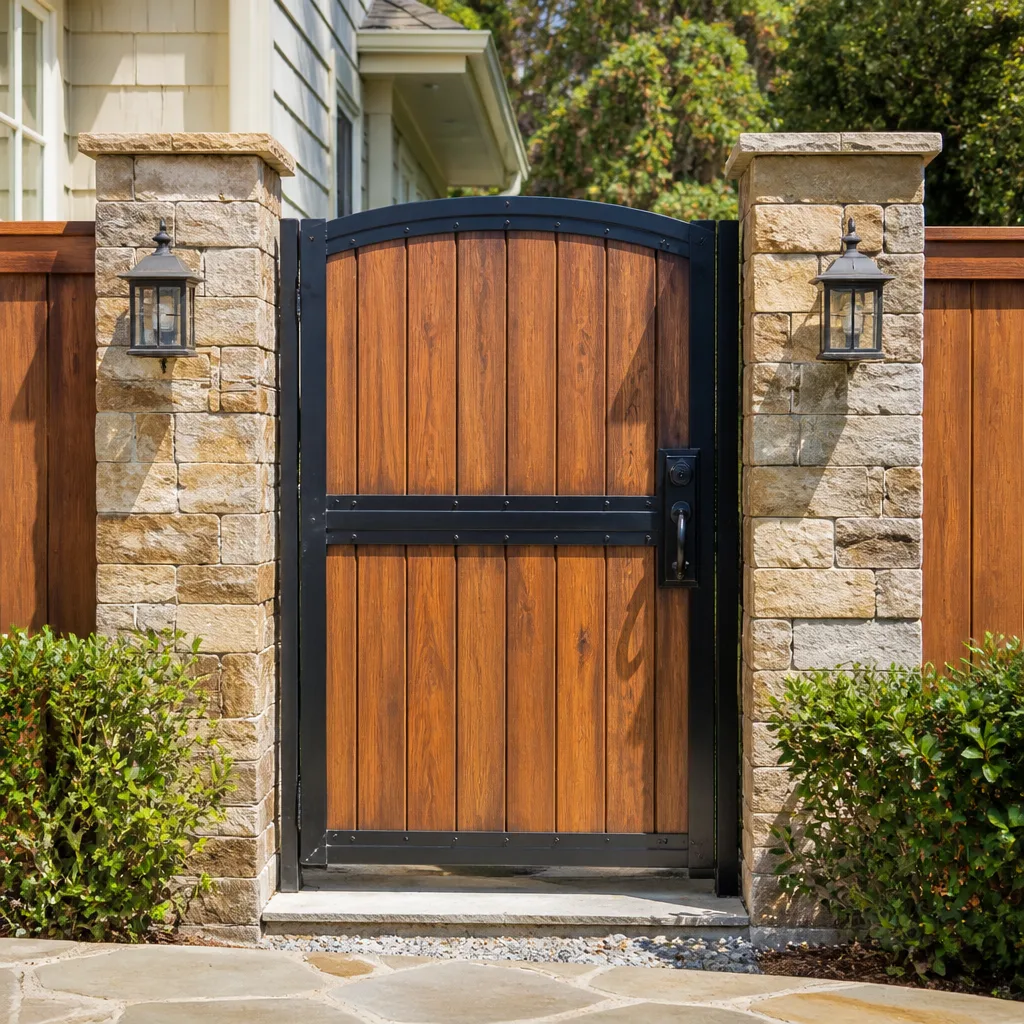 Wood & steel frame
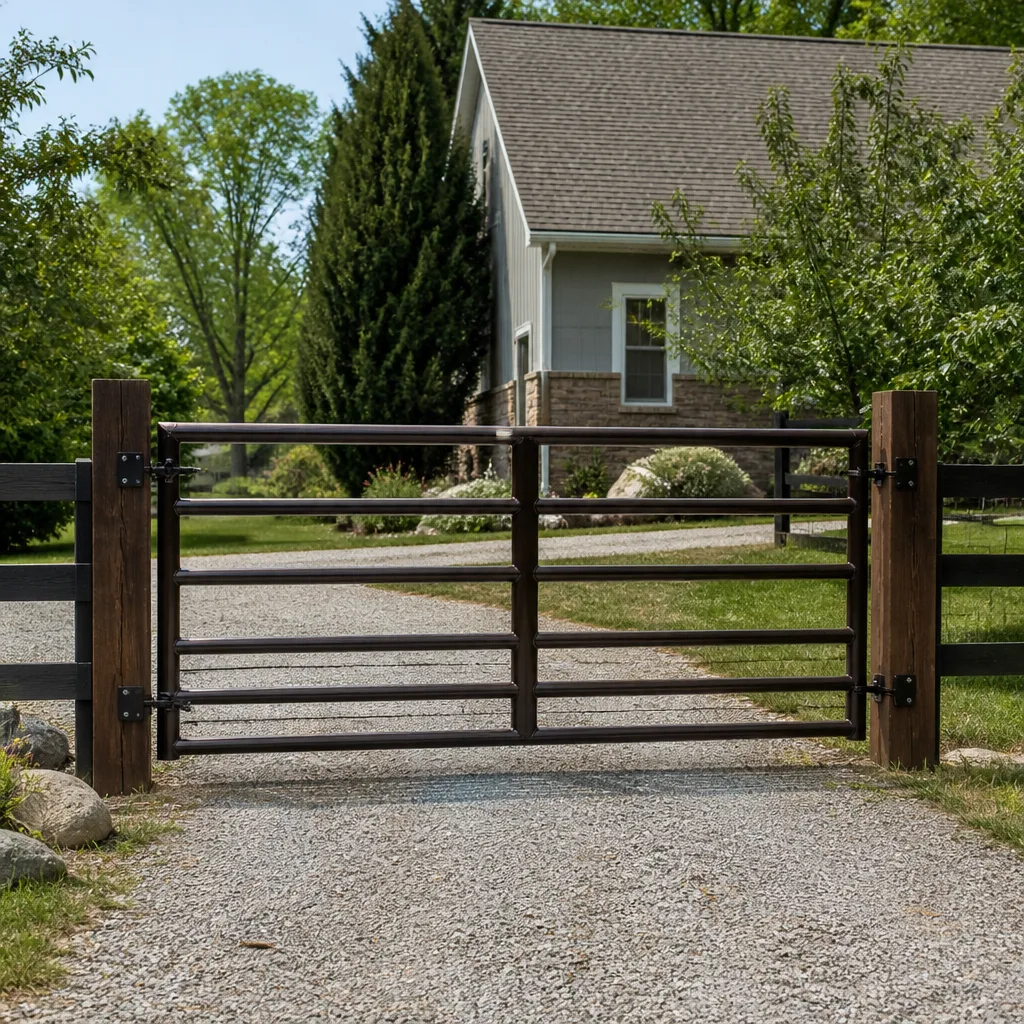 Farm & ranch
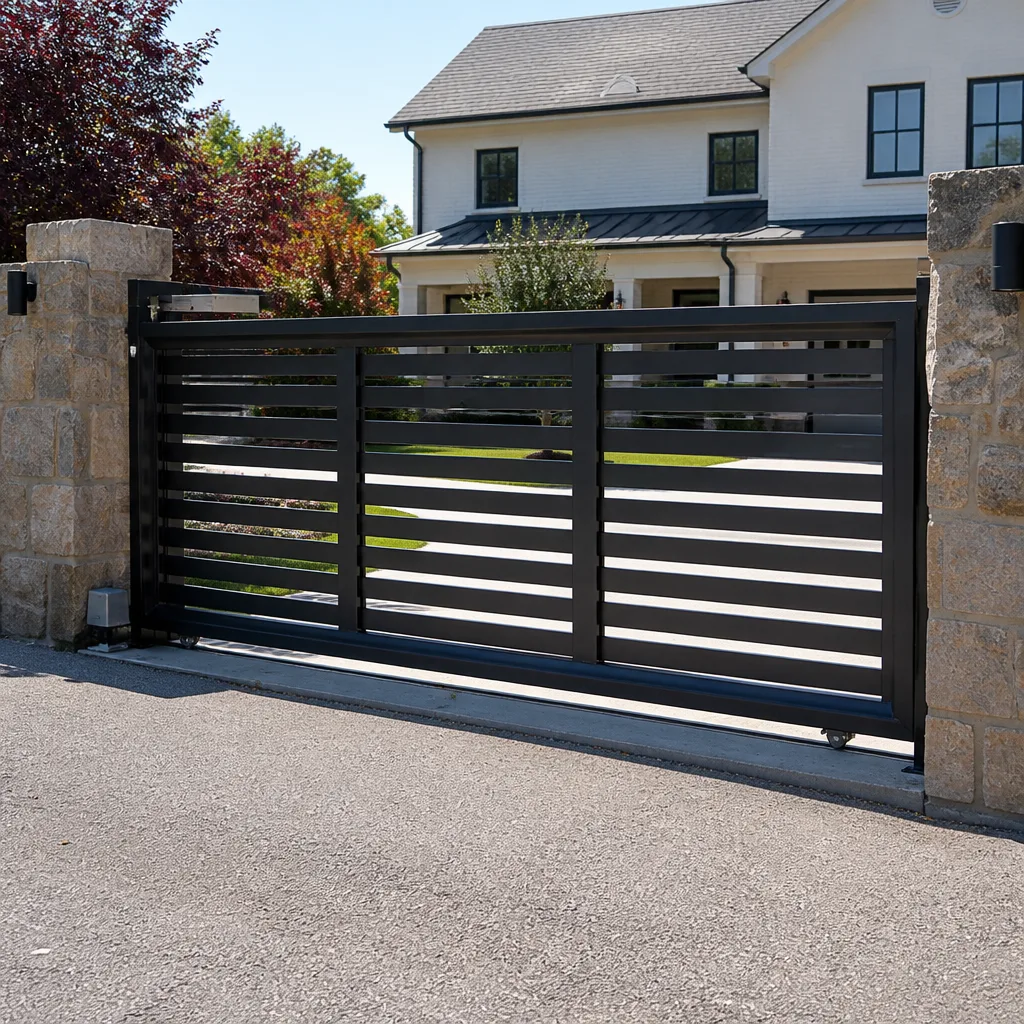 Sliding driveway gates
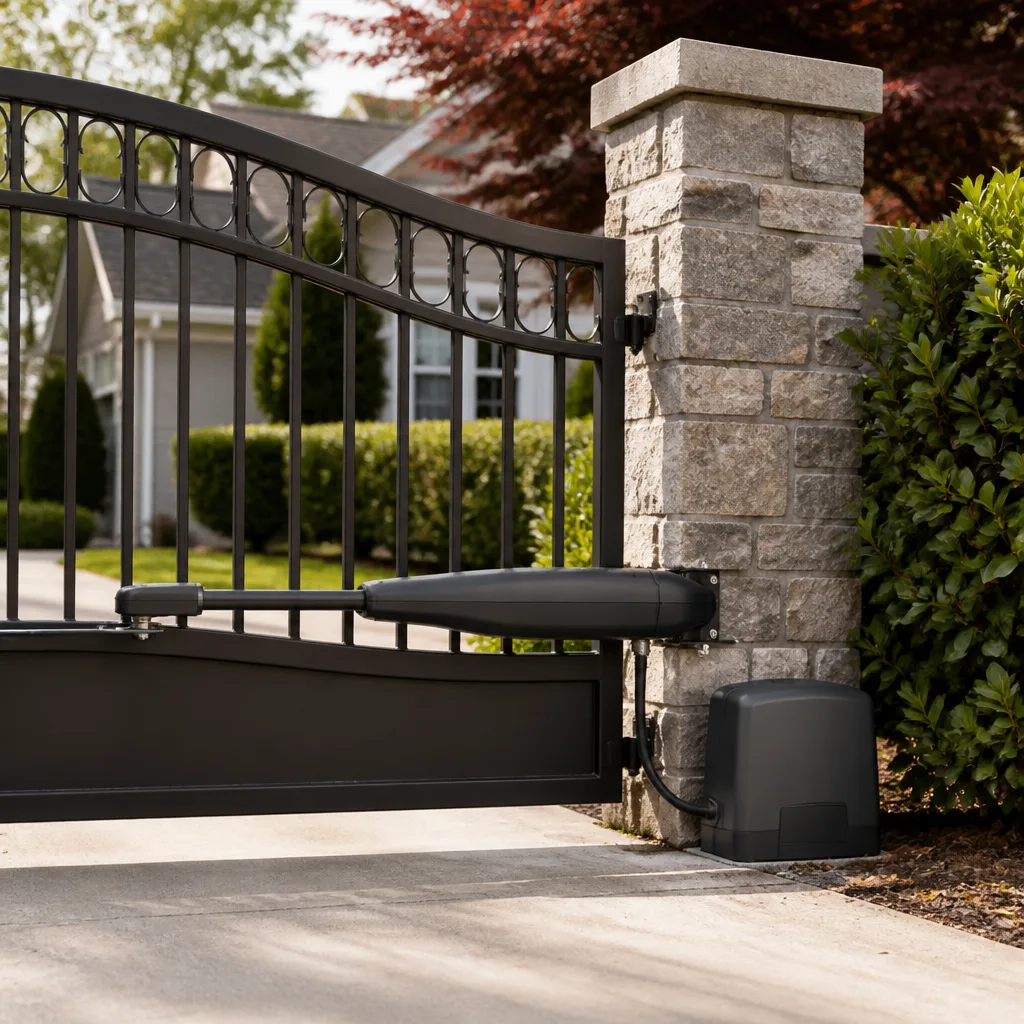 LiftMaster operators
Free on-site gate assessment - hinges, posts, and your LiftMaster or Nice gate operator checked before anything is quoted
The assessment is free and the quote is the invoice.
Get your free estimateDIY vs Professional Gate Repair: The West Hills Homeowner’s Decision Guide
Most gate repair advice treats DIY as a skill question: are you handy enough, or aren’t you? That’s the wrong lens. The real dividing line is the specific task in front of you. Adjusting a limit switch on a LiftMaster LA400 is a legitimate do-it-yourself job, and the manual walks you through it. Adjusting the entrapment protection force settings on that same operator is a different matter entirely. It requires a calibrated obstruction test to confirm UL 325 compliance, and a mistake there can create liability your homeowner’s policy may not cover. This guide draws that line precisely for West Hills homeowners: what’s safe to touch, what isn’t, and how to troubleshoot before you call so the repair costs less.
Quick Answer
The safe DIY tasks on a residential gate are limited to battery replacement, remote reprogramming, minor lubrication, and using the manual release. Everything involving the control board, entrapment force calibration, 120-volt wiring, post repair, or automatic opener installation should go to a trained gate technician. The reason isn’t just safety. It’s warranty validity, code compliance, and liability if the gate later injures someone or damages a vehicle. If your gate won’t open, won’t close, reverses unexpectedly, or makes a new noise, that’s a professional call, and a gate specialist in West Hills can diagnose it on-site.
Styles & brands we work with
- Wrought iron
- Wood & steel frame
- Farm & ranch
- Sliding driveway gates
- LiftMaster operators
Table of Contents
- What’s Actually Safe to Fix Yourself on a West Hills Gate?
- Which Gate Repairs Require a Professional?
- Oregon Liability: What Happens After a DIY Repair Goes Wrong
- The Tools a Real Diagnosis Requires (and Why They Cost More Than a Repair)
- Pre-Call Troubleshooting That Cuts Your Invoice
- How West Hills Weather Shapes Gate Problems
- Warranty and Insurance: The Fine Print Most Homeowners Miss
- Brand Matters: Why a Multi-Brand Technician Beats a Specialist in One System
What’s Actually Safe to Fix Yourself on a West Hills Gate?
Four tasks on a typical residential gate fall safely into DIY territory. If your gate is doing something odd and the fix is on this list, you can reasonably handle it before calling anyone.
- Battery replacement on the operator. Most residential openers use a sealed backup battery that slides or clips out. Lift your manual, find the battery compartment, swap it, and test. Ghost Controls and Mighty Mule systems are especially straightforward here, and a dead battery explains a surprising share of “my gate stopped working” calls.
- Remote reprogramming. If one remote works and another doesn’t, the problem is often the remote, not the gate. Re-pair it per the manual. This is a five-minute task on most systems, and it’s the first thing to rule out before scheduling a visit.
- Minor lubrication of the moving parts. Hinges, rollers, and the slide track take a light application of the lubricant your manual specifies, not a heavy coat of whatever’s in the garage. Over-lubricating attracts grit and can make things worse in a dusty climate.
- Manual release operation. Knowing how to disengage the operator and swing or slide the gate by hand is essential during a power outage. Practice it once with the gate stationary, so you’re not learning it in the dark.
None of these touch the control board, the force settings, or the 120-volt connection. That’s the boundary. If your fix requires opening the operator housing and touching a wire, it’s no longer on this list. Our technicians have up to 11 years of experience, and in that time the safest rule they follow is simple: no component that carries current gets handled without a trained hand on it.
Which Gate Repairs Require a Professional?
Five categories of work should always go to a trained gate technician, and each has a specific reason beyond general caution.
- Control board replacement. A board swap isn’t just unplugging one module and plugging in another. Boards are matched to the operator’s specific model and revision, and an incorrect board can cause erratic behavior that looks like a different problem. On DoorKing and FAAC systems, the board also handles access control logic, so a wrong replacement can wipe programmed codes.
- Entrapment force calibration. This is where DIY causes real legal exposure. The operator’s force settings determine how hard the gate pushes before it reverses on an obstruction. Too much force and the gate can injure a person or damage a car; too little and it reverses falsely. Confirming the setting requires a calibrated obstruction test that mimics a real body or vehicle. Getting this wrong without that test creates a condition no manual can prepare you for.
- Any 120-volt electrical connection. Line voltage at the operator is not a DIY circuit. Terminations, grounding, and conduit work need a licensed electrician or a gate technician qualified for the electrical side. This includes adding a new power run for a fresh installation or relocating an operator.
- Post repair and structural realignment. A gate that drags, binds, or has dropped on its hinge side often has a post problem underneath. Digging and resetting a post to proper footing depth is heavy, precision work. Getting it wrong means the gate fails again in a season, and it can pull hinges and operators out of alignment in the process.
- Any safety edge or photo-eye fault. These components are the gate’s safety system. A malfunctioning photo-eye that lets the gate close on an obstruction is the single most dangerous condition on a powered gate, and testing and repairing it requires the right test equipment.
For the full scope of what a specialist handles, our gate repair work covers both the mechanical and the electrical side, including legacy systems that parts catalogs have long since forgotten.
Oregon Liability: What Happens After a DIY Repair Goes Wrong
Homeowner’s insurance is not a get-out-of-jail card for a gate that injured someone because a repair was done incorrectly. This is the part most DIY guides skip entirely, and it matters more than the repair cost.
Oregon follows a comparative negligence rule, which means a court can apportion fault between the parties involved in an injury claim. If a gate strikes a delivery driver, a guest, or a child because an entrapment force setting was increased without a compliance test, the fact that the homeowner performed the repair is directly relevant to fault. A policy may still respond, but the insurer can raise questions about whether the work was done to the manufacturer’s specification. In practice, a claim involving unpermitted or non-compliant work often ends up in a coverage dispute that the homeowner has to litigate.
The same risk applies to vehicle damage. If a gate closes on a car because a safety photo-eye was bypassed, the driver’s insurer can pursue the property owner, and a repair made outside manufacturer guidance weakens the owner’s position considerably.
None of this means every task needs a licensed technician. It means the tasks that affect safety systems, structural integrity, or electrical connections should be performed by someone who can stand behind the work and document it. That’s the practical split.
The Tools a Real Diagnosis Requires (and Why They Cost More Than a Repair)
Here’s a fact that surprises most homeowners: the diagnostic tool for one brand often costs more than the repair itself. That’s not an argument against DIY. It’s an argument for understanding where the economics of a professional visit come from.
- LiftMaster diagnostic interfaces. The tools that read fault codes and confirm force settings on a MyQ-enabled LiftMaster operator are specialized. Without one, a technician is guessing, and guessing on a control board is how you end up replacing a board that was never the problem.
- FAAC programming handhelds. FAAC operators use a proprietary programmer to read and set parameters. A homeowner can’t substitute a generic multimeter for it.
- BFT and DoorKing programming platforms. These systems hold access control logic, and programming them correctly requires the right interface and the brand-specific software. That’s why access control programming sits firmly on the professional side of the line.
- Force-calibration test rigs. The biggest gap between a homeowner and a technician on entrapment settings is the calibrated obstruction test. Without the right rig, you cannot confirm the setting is correct, only that it “seems okay.”
Add up the tools for even two or three of these systems, and the cost dwarfs any single repair. That math is why a gate-specialist visit is economical: the tools are already in the technician’s kit when the call comes in. It’s also why we work on the brand you already have rather than pushing a replacement. When a technician already knows the platform, the diagnosis takes less time and the invoice follows.
Pre-Call Troubleshooting That Cuts Your Invoice
The most useful thing a homeowner can do for both the repair and the bill is gather information before calling. A technician who arrives knowing which symptoms you’ve seen diagnoses faster, and faster diagnosis means a lower invoice. Here’s how to prepare, in order.
- Note exactly what the gate does and when. Does it fail every time, or only sometimes? Only on open, only on close, or both? Only after rain? Only when the photo-eye is in direct sun? These answers narrow down the component immediately.
- Check the manual release. Disengage the operator and try moving the gate by hand. If it moves freely and smooth, the mechanical side is likely fine and the issue is electrical or in the control board. If it drags or binds, the problem is mechanical, and that’s valuable information before anyone arrives.
- Photograph the operator label. The serial label tells the technician exactly which model and revision they’re dealing with. That means they can arrive with the right board or parts possibility already in mind instead of ordering after a visit.
- Test every remote and keypad entry. If the gate works from one remote and not another, you’ve isolated the issue. If keypad access fails but remotes work, note that too, because it points at the access control side rather than the operator.
- Check the basics you can safely check. The battery, the photo-eye lenses (clean them), and the visible obstruction sensors. Don’t open the housing. Don’t touch wiring.
Armed with those five items, you’ll have a better conversation on the phone and a more accurate estimate. For major repairs, a written estimate before work starts is standard practice, and no one should begin work until the price is agreed.
How West Hills Weather Shapes Gate Problems
West Hills sits in a wet, temperate corner of the Pacific Northwest, and the gate problems we see here reflect that. It’s not the salt air of the coast, which this area doesn’t get. It’s the rain, the wet soil, and the seasonal swing between soaked ground and dry summer.
The most common climate-driven issue is post and footing movement. Saturated soil in the wet months softens around a gate post, and repeated seasonal wet-dry cycling can let a gate settle or lean over time. When a gate drags or binds, a technician checks the post before touching the operator, because no amount of tuning fixes a gate that’s hanging crooked. Proper footing depth, which varies with the gate’s weight and the soil, matters more here than in a drier climate.
Rain also stresses the electrical side. Conduit runs, junction boxes, and operator enclosures take on water when seals age, and a waterlogged control box shows up as intermittent faults that only appear in wet weather. If your gate misbehaves only after rain, say so on the call. That’s a specific clue, and the technician will know exactly where to look.
Photo-eye alignment is another weather-sensitive point. Sun in the direct path of a photo-eye can cause false reversals on clear afternoons, and dirt splashed up by rain can block the beam at other times. Neither of those is a reason to bypass a safety edge. Both are reasons to have the alignment checked.
Warranty and Insurance: The Fine Print Most Homeowners Miss
Warranty coverage on a gate operator or its components almost always contains language about installation and service by qualified personnel. A homeowner who opens the housing and replaces a control board can void coverage on the board and sometimes on the operator as a whole. This isn’t a scare tactic; it’s how most manufacturer warranties are written.
Before you take on a repair, spend two minutes with the manual’s warranty section. Check three things:
- Does the warranty require installation and service by a professional, or explicitly exclude self-service? Most do, at least for the electrical and entrapment components.
- Is the component you’re about to touch covered, and what are the terms?
- Does the warranty require the operator to remain set to the manufacturer’s entrapment specifications? Most brands, LiftMaster included, do, which brings the force-calibration question right back to the front.
On the insurance side, the practical question is how a claim gets treated when the work was done outside manufacturer guidance. It’s not a question of whether a homeowner can DIY at all. It’s a question of whether the work can be shown to conform to spec. When a technician does the work, the invoice and the repair record answer that question. When a homeowner does it, the answer depends on whether the work was documented and tested.
That’s the real value of a professional visit for the high-liability tasks: not the labor, but the documentation.
Brand Matters: Why a Multi-Brand Technician Beats a Specialist in One System
Gate operators are not interchangeable, and a technician who only knows one brand will either turn away the job or recommend a replacement they can install. Neither is useful to a homeowner with a working system from a brand that technician doesn’t handle.
We work on the brand you already have, whether it’s an entry-level Mighty Mule, a Viking slide operator, a Ghost Controls kit, or a DoorKing access control platform at a small commercial property. That translates into two practical benefits for a West Hills homeowner. First, the diagnosis is faster on known systems, because the technician already knows the failure patterns of that platform. Second, there’s no pressure toward a replacement that isn’t necessary. Recommendations are driven by what fits your gate, your budget, and your security need, not by which product earns the most margin.
The full range of work is handled in-house, from manual swing repairs through gate motor & opener replacement, access control programming, and full electric gate systems. A homeowner with an intermittent fault and a keypad that’s stopped accepting codes doesn’t need to coordinate two contractors. Both get tested in the same visit.
If your gate is dying and you’re weighing repair against replacement, a proper assessment is the right first step before you decide. We handle new gate installation as well, so a recommendation for a fresh gate comes after a genuine look at what you have, not before.
Common Mistakes to Avoid
- Bypassing a photo-eye because the gate “works better” that way. A gate that closes without detecting an obstruction is a serious injury waiting to happen. This single mistake comes up more than any other on safety-critical components, and no convenience is worth the risk.
- Raising entrapment force to stop false reversals. False reversals nearly always trace to photo-eye alignment, debris, or worn hinges. Turning up the force masks the symptom and creates the exact liability the setting is meant to prevent. Diagnose the cause instead.
- Buying a control board without checking the revision. Boards are matched to specific operator models and revisions. A board for the wrong revision fits the connector but behaves erratically, and the fault gets blamed on everything except the board.
- Ignoring a gate that drags on one end. In West Hills, a dragging gate frequently means a settling post from seasonal wet soil. Lubricating the hinges to make it move again buys a few weeks and lets the problem get worse underneath.
- Skipping the manual release test. If a gate fails closed during a power outage and the homeowner has never practiced the manual release, the gate becomes an immediate inconvenience and a potential hazard at the same time. Test it once now, when nothing is at stake.
- Assuming the remote is broken when the receiver isn’t hearing it. Reprogramming a new remote is free; replacing a receiver isn’t. Test with a known-working remote before buying anything.
- Starting a repair without a written estimate. Major gate work should always come with a quoted, agreed price before anything is opened. No homeowner should be in the position of finding out afterward.
See the difference
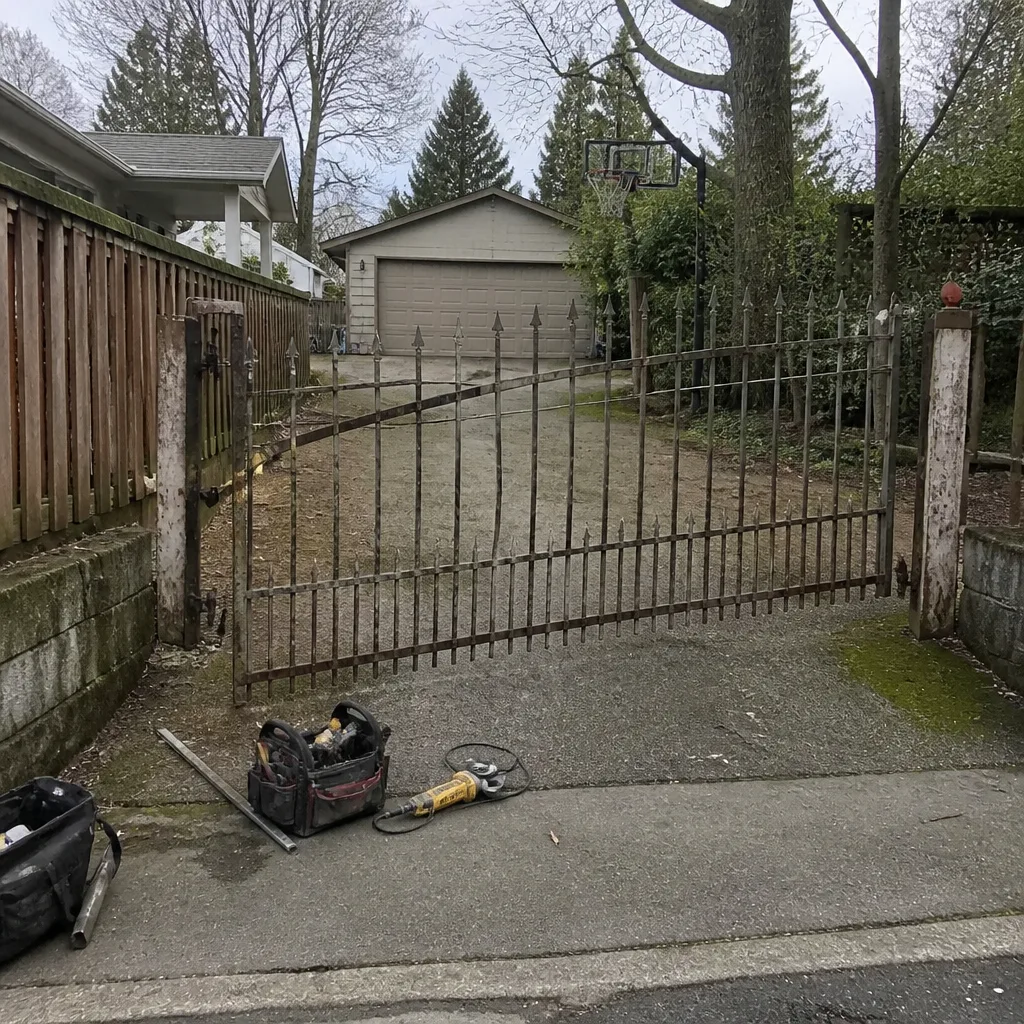 Before
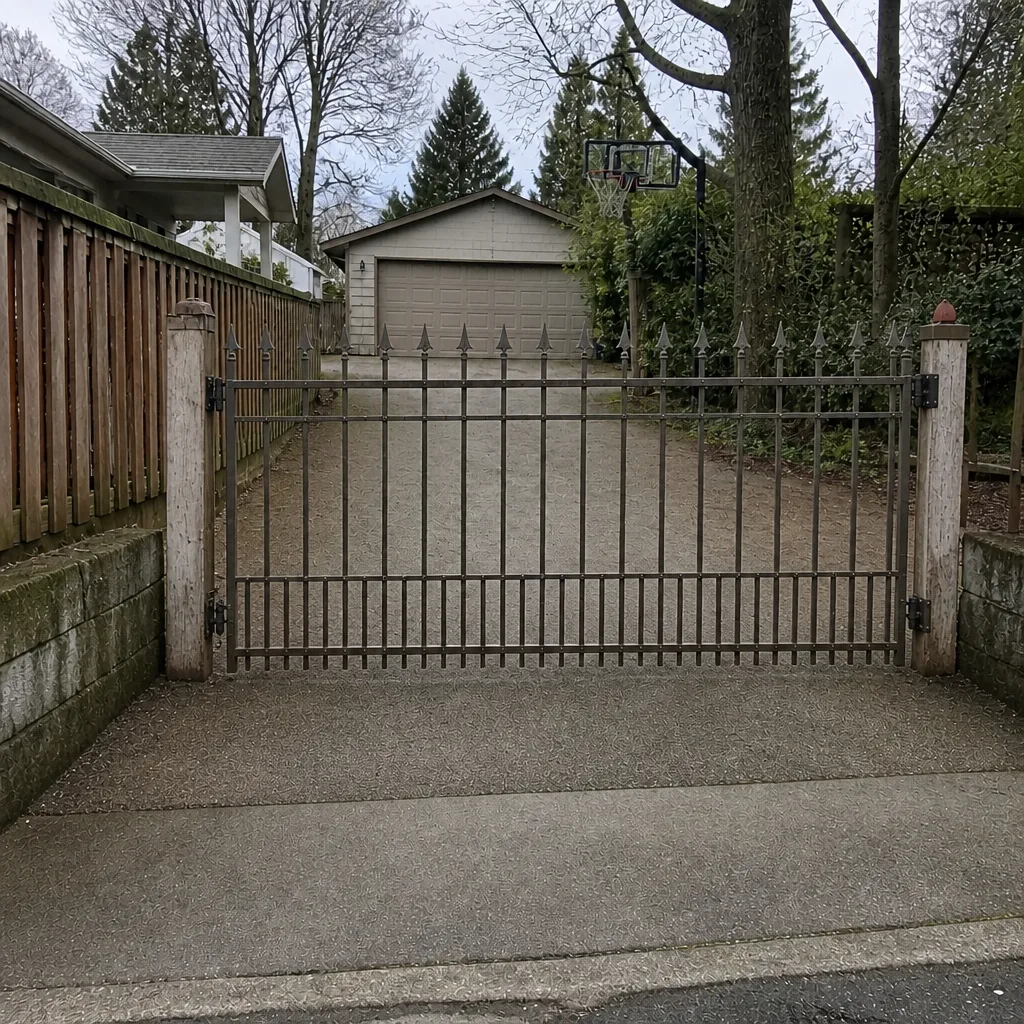 After
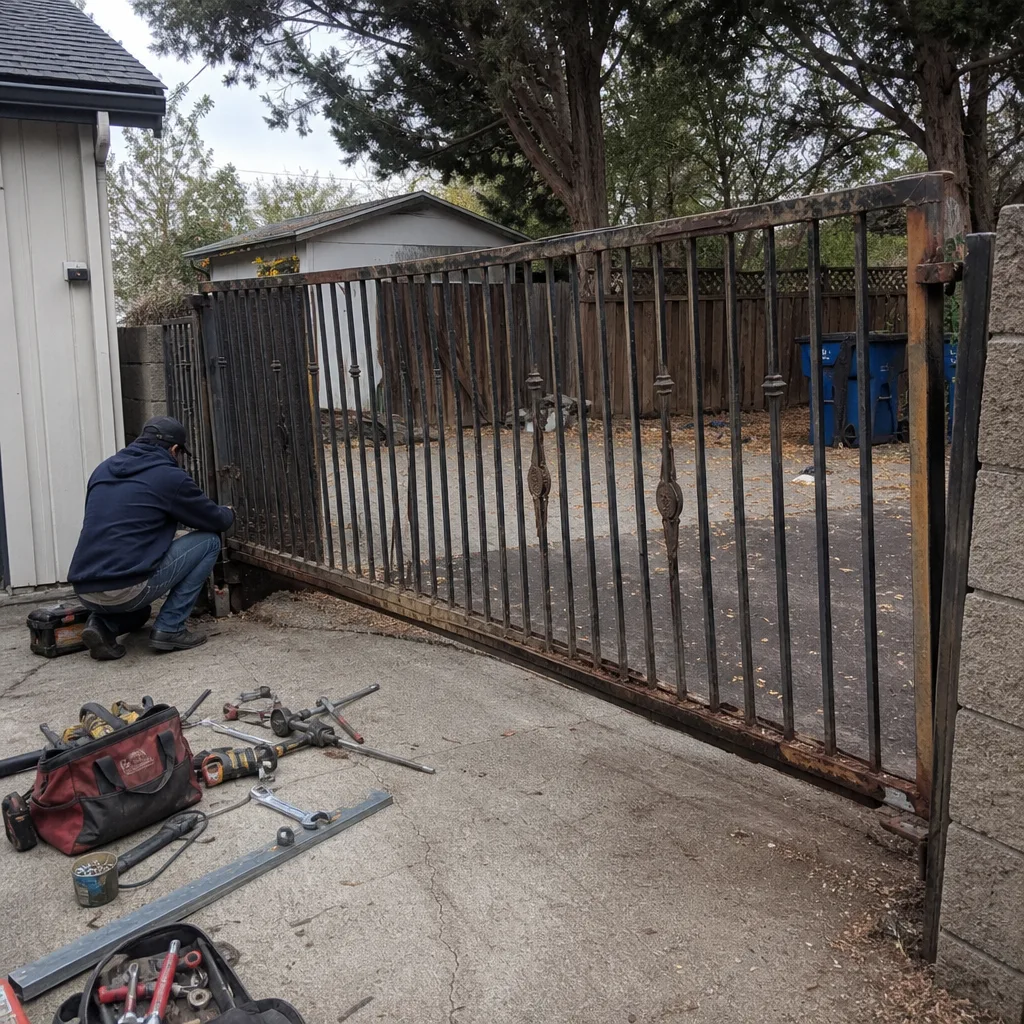 Before
 After
 Before
 After
When to Call a Professional
Call a trained gate technician when the gate reverses without an obstruction, fails to reverse when it should, won’t close at all, or drags on one side. Call when a control board has failed, when a safety edge or photo-eye is malfunctioning, when the post has shifted, or when a new operator is being installed or the power run needs to happen. Call when keypad access or intercom integration has stopped working, and call if you’re unsure whether a repair is safe to attempt. Our gate specialists serve West Hills and the surrounding area. Gate Repair West Hills offers free estimates in West Hills – call (877) 492-4403. The price is always quoted and agreed before any work starts, and if a repair is straightforward, that’s the answer you’ll get. For an overview of who we are and what we do, visit Gate Repair West Hills.
Frequently Asked Questions
Yes. Limit switch adjustment is a legitimate DIY task on most residential operators, including the LiftMaster LA400, and the manual gives clear instructions. It’s a mechanical adjustment that changes how far the gate swings or slides before stopping. What you shouldn’t adjust yourself is the entrapment force setting, which requires a calibrated obstruction test to confirm compliance. Call (877) 492-4403 if you’re unsure which setting you’re looking at.
A gate that reverses or fails to close, usually traced to a misaligned or dirty photo-eye or a control board fault. The wet climate in West Hills also drives a steady share of post settling and dragging gates. Both are diagnosed on-site and repaired in the same visit when the parts are on hand. Call (877) 492-4403 for a free estimate.
You don’t need to call the manufacturer for most repairs. We work with LiftMaster, FAAC, BFT, Linear, Viking, Ghost Controls, DoorKing, Elite, and Mighty Mule systems, including legacy and current-generation units. A technician who knows the platform can diagnose faster. Call (877) 492-4403 and describe your operator label.
Often a full diagnostic step. Knowing whether the gate fails on open, on close, or both, whether it moves freely when manually released, and whether all remotes fail or just one cuts the technician’s diagnosis time significantly. That shortens the visit, and the invoice follows the visit. Call (877) 492-4403 with your notes and we’ll give you a realistic estimate.
It can, particularly on the control board and entrapment components. Most manufacturer warranties require service by qualified personnel and require the operator to remain set to specification. Read the warranty section of your manual before opening the housing. If you want the work documented, call (877) 492-4403 – the invoice answers the warranty question that a DIY repair leaves open.
Yes. We handle both residential driveway gates and light commercial access control, including DoorKing platforms, keypad and fob programming, and intercom integration. Programmed codes and access logic are preserved through repair when the platform supports it. Call (877) 492-4403 to schedule an on-site estimate.
The Bottom Line
The DIY line on a gate isn’t about your skill. It’s about which component you’re touching. Battery replacement, remote pairing, light lubrication, and manual release operation are safe to handle yourself. Control board replacement, entrapment force calibration, 120-volt connections, and post repair belong to a trained technician, because the risk is warranty, code compliance, and liability rather than a botched repair. Read your manual’s warranty section, gather symptoms before you call, and get a written estimate before any work starts. In West Hills, that split is the difference between a five-minute fix and a claim you didn’t plan for.
Call (877) 492-4403 for a free estimate. We work on the brand you already have, and the price is quoted and agreed before anything is touched.
Written by the team at Gate Repair West Hills.